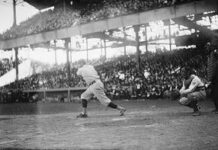
The 1924 post-season found Babe Ruth doing exactly what you’d expect: overeating, overdrinking, and ignoring the cracks forming in his marriage to Helen. She was frail and sensitive to begin with, and the public spectacle of his gargantuan habits was wearing her down. While Ruth seemed to be cruising through life as usual, a cascade of medical disasters was waiting in the wings.
The 1925 Yankees and Ruth’s Preseason Struggles
Manager Miller Huggins confidently declared the 1925 Yankees the strongest team he ever managed after acquiring pitcher Urban Shocker from St. Louis. He was dead wrong. The roster was aging. Lou Gehrig was just starting his career, Earle Combs was flashy, and Bob Meusel could hit, but that was about it. The biggest problem? They started the season without their star slugger.
Ruth had signed a two-year extension at his old salary of $52,000. He went to Hot Springs to sweat off roughly 40 extra pounds, but the weight stayed put. Then, in March, a pitch broke the tip of one of his fingers. By the time the team reached Spring Training in St. Petersburg, Florida, he looked terrible. Huggins told him bluntly. Ruth replied, “I’ve got a temperature of a hundred and five and eight fifths.” The seasonal flu was back, but this time it was vicious.
Why Babe Ruth Collapsed During the 1925 Spring Training Road Trip
Ruth was still out of shape when the Yankees began their exhibition swing against the Dodgers. After a game in Atlanta, a doctor told him to stop traveling with the team. His fever hadn’t broken, and he was weak. Ruth ignored the advice. The next day in Chattanooga, playing in cold, rainy weather, he hit two home runs. One reportedly cleared 400 feet. He was hitting .449 despite losing 21 pounds from the illness.
The rail trip then took them to Asheville, North Carolina, through the winding, difficult Smoky Mountains. The twists and turns made several players nauseous. When the train finally hit solid ground in Asheville, Ruth collapsed. Catcher Steve O’Neill caught him before his head hit the marble floor.
News reports said he had the “grip,” a common term for influenza. The London Evening News went further, reporting his death and noting that his portly figure forced him to wear braces instead of a belt, supposedly starting a US fashion trend. Canadian papers also announced his death when his train was delayed in Washington. Sports reporters, who were used to Ruth getting the flu every spring, initially didn’t make front page headlines. Then they realized the scale of it. They dubbed it “The Bellyache Heard ‘Round the World,” blaming his pop and hot dog consumption.
On the train from D.C., Ruth managed to force down a large breakfast. It was too much for his sore gut. He collapsed, vomiting. When he came to, he collapsed again in the men’s room, hitting his head on the washbasin.
How the New York Reception of Babe Ruth Unfolded at Penn Station
When Ruth and Yankee scout Paul Krichell arrived at Penn Station, the scene was chaotic. One biographer estimates 25,000 people were waiting. The stretcher they brought was too large to fit through the train doors, so they cut out the side panel between two windows to carry him out. He suffered three more convulsive attacks on the stretcher. Six men had to hold him down.
He met his wife there. All he could say was, “Helen, I feel rotten,” before they loaded him into an ambulance. He had three more convulsions during the ride to St. Vincent’s Hospital.
Doctors at the hospital initially claimed it was just the flu and he needed rest. The next day, they performed surgery for an “intestinal abscess.” It was a brief but highly painful operation requiring two deep incisions. Ruth was out of the lineup for seven weeks.
What Was the Real Illness That Made Babe Ruth Miss Seven Weeks?
The “true” nature of the illness remains debated. The children’s story that he overdosed on hot dogs is absurd. The actual condition was embarrassing enough that reporters could only get the phrase “intestinal abscess” from the team. Whatever it was, it was serious.
Ruth’s recuperative powers were remarkable. He bounced back quickly after the operation. But his marriage was not. Helen joined him in the hospital and checked herself in two weeks later for a nervous breakdown. Photos show Ruth sitting at her side, holding his teary face in his hands, watching her deteriorate. It was the final chapter of their relationship. For all intents and purposes, their marriage was over.
When Did Babe Ruth Return to Play in 1925 After His Illness?
Ruth left the hospital in late May and spent several days at the ballpark getting ready. He made his reappearance on June 1. The Yankees were already 10 games below .500, sitting in seventh place. But the day he re-entered the lineup is remembered for a different reason entirely.
The $5,000 Fine That Nearly Ended It
The tension between George Huggins and Babe Ruth exploded in late August. The trigger? Three consecutive nights away from the team hotel in St. Louis. Huggins’s private eye reported that Ruth was “holding court” in a bawdy house. The manager had had enough.
After getting the green light from owners Jake Ruppert and Ed Barrow, Huggins cornered Ruth in the clubhouse on August 29.
“Don’t bother getting dressed,” Huggins told him. “You’ve been fined $5,000 and suspended indefinitely.”
Ruth spun out of control. He physically threatened the diminutive manager and let fly with salty language. The fine itself was a shock to the system. No one in the league had ever seen a penalty that high. Previous maximums hovered around $500. To put the $5,000 in perspective, it represented nearly 10% of Ruth’s salary. In modern terms, that’s equivalent to fining Barry Bonds half a million dollars.
Ruppert, surprisingly, stayed friendly with Ruth during the suspension. They even attended a few games together. But Ruppert held the line: the manager stood firm.
Appealing to Judge Landis and the Path Back
Ruth tried to take his case to the highest authority in baseball: Commissioner Judge Landis. Landis wasn’t available. Ruth was stuck.
For a few days, the storm raged. Then, the contrite Babe cooled off. He apologized. He apologized again. Huggins remained adamant.
“I’ve heard that before,” the manager said.
It took nine days. Finally, on September 7, Huggins granted permission for Ruth to suit up and play again. In retrospect, Ruth admitted the truth.
“I was a babe and a boob.”
The fall was massive. Only a man of Ruth’s immense proportions could stumble that hard. But the “experts” were wrong again. The doubters who predicted the end of the road were in for a surprise. Ruth wasn’t done. He was coming back, greater than ever.