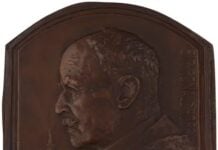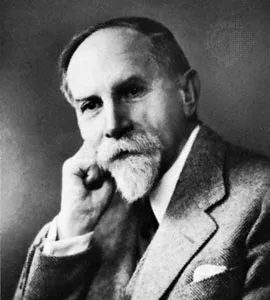
Adolf Meyer was a Swiss-born American psychiatrist who reshaped how the United States and Britain understood mental illness. Born in Niederweningen in 1866, he died in Baltimore in 1950. His teachings did not just stay in textbooks. They became the foundation of clinical practice in English-speaking countries for decades.
When Meyer arrived in the United States in 1892, he already had a formidable skill set. He held a medical degree from the University of Zürich, earned under the tutelage of Auguste-Henri Forel. He knew neuroanatomy and neurophysiology inside out. This technical expertise gave him a head start. But his real innovation came from looking elsewhere. He absorbed the ideas of American thinkers like psychologist William James and philosopher-educator John Dewey. These men were busy reshaping sociological and philosophical traditions. Meyer took those influences and fused them with his medical training. He created a concept called ergasiology, also known as psychobiology. The goal was simple but radical: integrate the psychological and biological study of human beings into one cohesive framework.
His early career tested this theory. As a neuropathologist at the Illinois Eastern Hospital for the Insane in Kankakee from 1893 to 1895, Meyer focused on something often ignored: accurate case histories. He realized that data points mattered less than the narrative of a patient’s life. Before Sigmund Freud gained widespread recognition, Meyer was already suggesting that childhood sexual feelings could trigger serious mental problems. He was looking at behavior, not just biology.
Over time, his view shifted further. He concluded that mental illness stemmed from personality dysfunction rather than physical brain pathology. This was a major departure from the prevailing medical models of the time.
He continued this work as chief pathologist at the mental institution in Worcester, Massachusetts, from 1895 to 1902. Then, he moved to New York. He served as director of pathology for the Pathological Institute of the New York State Hospital Service on Ward’s Island from 1902 to 1910. He also taught psychiatry at Cornell University Medical College from 1904 to 1909.
In New York, Meyer became acutely aware of the role social environment plays in developing mental disorders. This insight led to a practical change in procedure. His wife, Mary Potter Brooks, began visiting patients’ families. Her interviews were not just social calls. They were the first effort in psychiatric social work. She gathered the context that the hospital walls could not provide.
Meyer insisted that diagnosis and treatment must account for the patient as a whole person.
In 1910, Meyer moved to Johns Hopkins University in Baltimore. He became a professor of psychiatry there. By 1914, he was also the director of the Henry Phipps Psychiatric Clinic. He stayed until his retirement in 1941.
During those three decades, he impressed generations of students. His core message remained consistent. You cannot treat a symptom in isolation. You must understand the whole person.
His ideas survived him. They are preserved in his Collected Papers, published in four volumes between 1950 and 1952. His work also appears in Psychobiology, released in 1957. The legacy of a man who started by studying brain tissue ended up being about the stories we tell about ourselves.