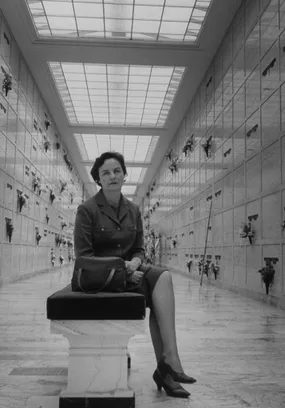
Alma Merrick Helms was already semi-retired as an actress when she made a decision that would define her later years. In 1956, she announced her acceptance to Stanford University. She wasn’t going to sit in lecture halls or study for exams. She was going to be a cadaver.
Helms had noticed serious deficiencies in the medical education system – “a “special shortage of women’s bodies”” – and upon her death the necessary paperwork to donate her body to a medical school.
Historians of medicine are well aware of the history of brutal grave robbing in the 18th and 19th centuries. Medical students were forced to loot exhumed bodies just to practice anatomy. However, little is known about the fact that thousands of Americans actively sought alternatives to traditional burial during the 20th century. These were people who literally gave themselves away.
We have researched this particular form of philanthropy and are currently writing a book on the subject. The story is more complicated than just altruism.
Early Anatomy Problems
The rapid opening of medical schools before the Civil War caused a crisis. Doctors needed to cut open dead bodies to understand human anatomy. No one wants to undergo surgery by a doctor who has only learned from books.
But for most Americans, dissection was sacrilegious. It was seen as disrespectful and grotesque.
The cultural consensus is clear. Only criminals deserve such a fate after death. Judges often adding dissection to the execution, increasing the murderer’s death sentence. Enslaved people were also exploited in death. consigned for dissection by their masters or stole from their graves.
Legally available bodies can never meet the demand. Tomb robbing is rampant.
Law and the Unclaimed Poor
Massachusetts passed the first anatomy law in 1831 to solve this shortage. This law allowed medical schools and hospitals to use the bodies of unclaimed poor people for dissection.
Similar laws are being implemented across the country As more schools opened and the grave-robbing scandal sparks public outrage.
This system is not immune to high-profile failures. In 1878, the body of former Congressman John Scott Harrison turned up on an dissecting table in Ohio. Harrison was the son of one US president and the father of another. His presence on the table was involuntary and caused a scandal.
In many states, families can claim bodies that would otherwise be dissected. However, this is only if you can afford the burial costs. If payment is not possible, the body is went to science.
From fear to tolerance
Medical students aren’t the only ones who come into contact with dead bodies. By the end of the 19th century, a quiet change was taking place in America. People who once feared being cut suddenly no longer care. They suggest that students chop them up before burial or cremation.
Dislike? It doesn’t seem to matter to them.
Doctors signed up. The same applies to nurses. Store owners. Actors. Factory workers. Even prisoners facing execution. Some people want to avoid expensive funerals. Some people have a greater mission. They want doctors to investigate their illness. Former coachbuilder George Young said in 1901 that this was the best. He said he hoped his body would help expand medical knowledge and benefit humanity.
Eyes that see the light again
Fast forward to the late 1930s. Corneal transplant surgery has advanced so much that eye donation has become a reality. Americans can donate an eye to help restore sight to the blind and visually impaired.
Combined with World War II blood drives, these stories spread. They offer new ideas about what to do with the body after death. It’s not just about funding science anymore. It’s about corporeal generosity.
But this new wave of donations is causing problems for anatomists. The number of unclaimed bodies has decreased.
Why? Several factors play a role. Post-war prosperity allowed families to afford funerals. According to the new law, local authorities can bury unburied people. Veterans got death benefits. Social Security kicked in. Church groups and fraternal organizations increased their efforts to help the poor.
By the mid-1950s, medical schools began to worry. They needed cadavers for anatomy classes. However, the media helped turn the tide. Donors’ stories inspire others to follow suit. A 1958 Dear Abby column highlighted this problem. A 1961 Reader’s Digest article said the same thing.
Organizing the Act of Giving
Public opinion is changing, but the infrastructure is lagging behind. In 1962, Unitarian Ernest Morgan intervened. He published the Simple Burial Manual. The book promotes memorial services as a cheaper, less spectacular alternative to traditional funerals.
More importantly, it included a directory. It listed medical schools and dental schools that accept whole body donations. For the first time, someone made it easy to find your way.
It’s not just about avoiding death. It’s about what you leave behind. The fear of cutting is replaced by the desire to be useful.
Turning body donation from shame to honor
In 1963, Jessica Mitford changed this narrative. Her book The American Way of Death is not only a critique of the high costs of the funeral industry. She actively promoted an alternative. He helped redefine donation to science, not as a last resort, but as a fine and even nobler alternative to traditional funerals.
This change did not happen in a vacuum. Religious leaders also joined the movement. By the early 1960s, prominent Protestant, Catholic, and Reform Jewish figures began to openly support the practice. The message is clear. giving your body to medicine is an ethical act.
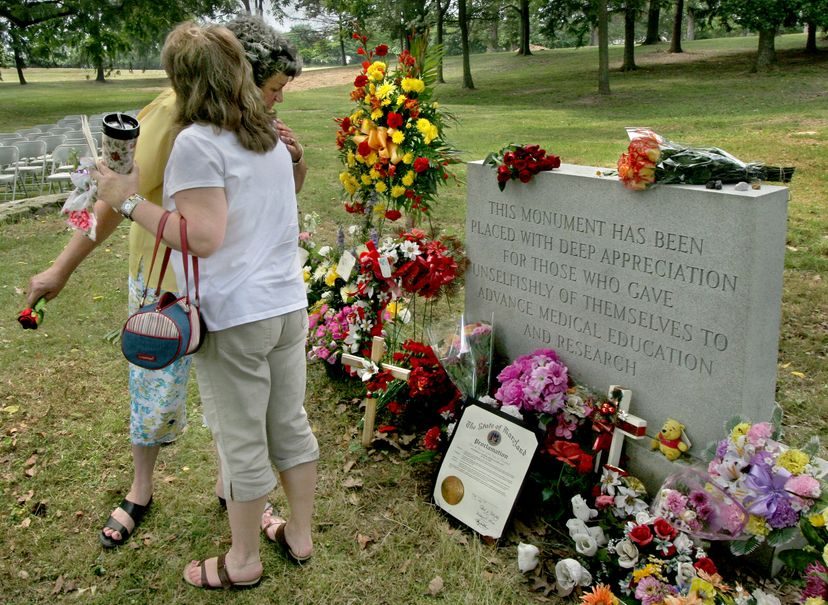
In the late 1960s and early 1970s, the tone began to soften even more. Anatomy departments started holding memorial services. These events thank donors and provide closure for grieving families. The existence of these rituals helps to normalize this practice and encourage more people to register.
Donors are heroes
We went through dozens of unpublished letters from the 1950s to the early 1970s. Correspondence between an anatomy professor and a potential donor reveals a particular story. Professors encouraged prospects to see themselves as heroes for their contributions to medicine.
Early donors accepted this position. They hope their remains will contribute to knowledge. It’s a very selfless vision.
By the mid-1980s, body donation had become the norm. Most medical and dental schools require teaching anatomy in the body. Although there are still a few unclaimed bodies left at the school, most of the specimens have been donated on purpose.
Why the body still matters
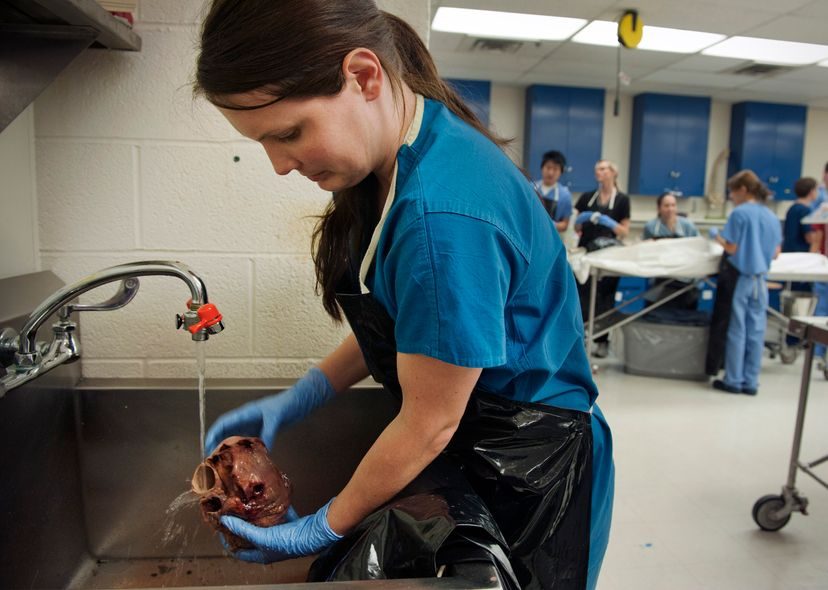
Technology has changed anatomy education. Projects like the National Library of Medicine’s Visible Human Project provide digital precision. However, models and images cannot fully imitate working with human tissue.
Students still need hands-on experience. This need keeps the demand for donors steady.
Cultural perceptions have changed dramatically. Americans once thought of medical students as “butchers” who took advantage of the dead. Today, students often praise donors. They call them “first patients” and recognize that the opportunity to learn through direct contact with the human form is a profound gift.
This development reflects the widespread acceptance of body donation as a final act of contribution to medicine and education.
*This article was written by Susan Lawrence, Professor of History at the University of Tennessee, and Susan E. Lederer, Professor of the History of Medicine and Bioethics at the University of Wisconsin-Madison. *