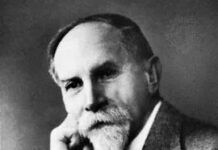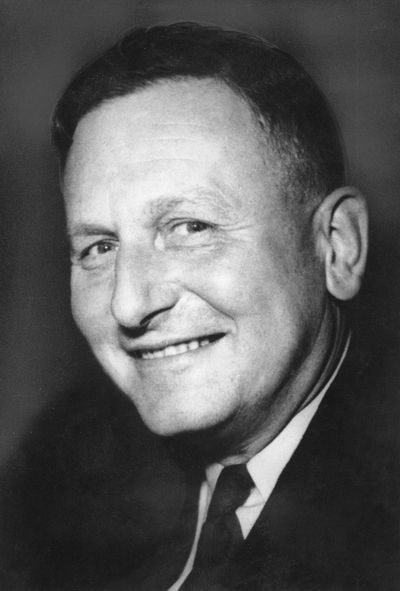
Paul Hermann Müller was a Swiss chemist whose work fundamentally altered the landscape of both global agriculture and public health. Born in Olten on January 12, 1899, and dying in Basel on October 12, 1965, Müller’s name is inextricably linked to DDT. He was awarded the Nobel Prize for Physiology or Medicine in 1948 for uncovering the potent toxic effects this chemical had on insects. For over two decades, DDT and its derivatives served as the world’s most widely used insecticide. This dominance played a pivotal role in boosting global food production and suppressing diseases transmitted by insects.
The Search for an Ideal Insecticide
Müller spent his entire career at the J.R. Geigy Company in Basel, working as a research chemist from 1925 until his death. His early work focused on dyes and tanning agents. The trajectory changed in 1935 when he began searching for what he termed an “ideal” insecticide.
His criteria were specific and demanding. He wanted a compound that demonstrated rapid and potent toxicity against the widest possible range of insect species. Crucially, it had to cause little to no damage to plants or warm-blooded animals. He also required high chemical stability. This meant the substance would persist for long periods, ensuring lasting protection while keeping manufacturing costs economical.
Four years into this search, Müller tested dichlorodiphenyltrichloroethane, commonly known as DDT. The compound fit all his requirements. It is worth noting that the German chemist Othmar Zeidler had first synthesized the compound back in 1874. Zeidler failed to recognize its potential as an insecticide. Müller saw what others missed.
Combatting Typhus and Protecting Crops
The validation of DDT came swiftly. In 1939, the Swiss government tested it successfully against the Colorado potato beetle. The U.S. Department of Agriculture followed suit with successful trials in 1943.
The most dramatic early application occurred in January 1944. DDT was used to quash an outbreak of typhus carried by lice in Naples. This marked the first time a winter typhus epidemic had been stopped using chemical intervention. The success was immediate and visible.
The Ecological Cost of Persistence
Müller’s ideal insecticide was designed to be relatively nontoxic to humans and other warm-blooded animals. However, the widespread adoption of DDT introduced unforeseen consequences. The chemical’s persistence became its most significant flaw.
By 1968, estimates suggested that one billion pounds (453 million kg) of DDT remained in the environment. This longevity made it a hazard to animal life. Signs emerged showing that DDT was disrupting ecological food chains. The very stability that made it economically viable for agriculture turned it into an environmental liability.
The Decline of DDT
The initial triumph gave way to regulatory backlash. By 1970, DDT was being rapidly supplanted by agents that degraded more quickly and posed less toxicity. Its use was banned in a number of countries. The substance that once saved millions from disease and starvation became a symbol of ecological disruption. Müller’s discovery was a