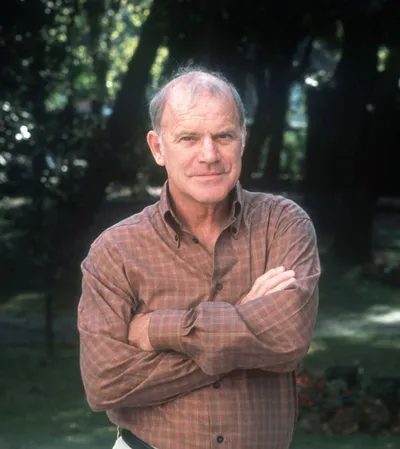
Kary Mullis didn’t just change science. He accidentally reinvented how we look at life itself. Born in Lenoir, North Carolina, in 1944, he died in Newport Beach, California, in 2019. But his legacy isn’t in his biography. It’s in every hospital lab and forensic team on earth. He co-won the 1993 Nobel Prize for Chemistry. The reason? The polymerase chain reaction. PCR. It’s a simple trick. Take a tiny speck of DNA. Copy it billions of times. Do it in a few hours.
Before this, getting enough DNA to study was a nightmare. It was slow. It was expensive. It was hard. Mullis fixed that.
The Accidental Genius
Mullis wasn’t always a lab rat. After getting his doctorate in biochemistry from UC Berkeley in 1973, he walked away. Science wasn’t calling. He wanted to write fiction. He worked at a bakery. For two years. He kneaded dough instead of nucleotides.
Then he drifted back. He took research posts at various universities. In 1979, he landed at Cetus Corp. in California. This biotech firm became the stage for his biggest moment.
He developed PCR in 1983. The idea didn’t hit him with a thunderbolt. It came while driving. Alone. On winding mountain roads through California. He was driving fast. Thinking about DNA. He started seeing chains of coiled molecules. Electric colors in his mind. He imagined the structure. He realized you could copy it. Repeatedly. Exponentially.
“Functionally sober,” Mullis later wrote, he saw electric visions of DNA while driving, leading directly to the PCR concept.
He claimed his time synthesizing and using LSD at Berkeley opened his mind. Whether that chemical haze sparked the insight or not, the result was real.
The Chemistry of Copying
So, how does PCR work? It relies on four main ingredients. No magic. Just chemistry.
First, you need the template DNA. That’s the double-stranded segment you want to copy. Second, you need primers. These are short, single-stranded DNA segments. They match specific spots on the template. Third, you need nucleotides. The basic building blocks of DNA. Fourth, you need a polymerase enzyme. This enzyme builds the new strands.
The process is a cycle. Heat. Cool. Repeat.
Heat the mixture. The DNA strands separate. Cool it down. The primers attach to their complementary spots. The polymerase jumps in. It adds nucleotides to the primers. Now you have two double-stranded molecules.
Do it again. And again. Thirty cycles take only a few minutes. Each cycle doubles the DNA. After thirty rounds, you have more than a billion copies. From one original strand.
The $300 Million Betrayal
Mullis got a bonus. $10,000. That was it.
Cetus Corp. held the rights to PCR. They patented it. They controlled it. In 1986, Mullis left the company. He was bitter. He felt cheated. The company sold those rights for $300 million.
Three hundred million dollars. Mullis got a bonus and a severance. The rest vanished into corporate accounts. He never saw a fraction of the fortune his invention spawned.
From 1986 to 1988, he worked at Xytronyx, Inc. in San Diego as a director of molecular biology. Then he went freelance. Consulting. Drifting. He started surfing. The ocean replaced the lab bench.
Why PCR Changed Everything
The applications are everywhere. You probably interact with PCR daily without knowing it.
In medicine, it’s a diagnostic powerhouse. Doctors can identify bacterial or viral infections from tiny samples. No need to grow bacteria for days. Just amplify the genetic material. Screen for genetic disorders. Sickle cell anemia. Huntington’s chorea. PCR detects them. Fast.
Forensic science relies on it. Crime scenes yield little. A strand of hair. A drop of blood. Semen traces. PCR amplifies what’s there. It identifies suspects. It identifies victims. It brings closure.
Evolutionary biologists use it too. They pull minute amounts of DNA from fossil remains. Ancient species. Extinct mammals. PCR makes those ancient strings readable. It’s also a key tool in DNA sequencing.
The Complicated Man
Mullis was brilliant. He was also difficult. He had a combative personality. At Cetus, he argued with coworkers. He argued with superiors. He didn’t play nice.
His personal life was chaotic. He pursued women aggressively. He included photos of naked women in his scientific presentations. That wasn’t just eccentricity. It was a boundary-crossing habit. He went through three divorces. He remarried for a fourth time.
He held controversial views. He rejected climate change. He denied HIV caused AIDS. These were not scientific positions. They were personal beliefs. Some called them conspiracy theories. Others called him a maverick. Most scientists just wanted him to stick to the chemistry.
His autobiography, Dancing Naked in the Mind Field (1997), laid it all out. He wrote about the driving. The visions. The anger at Cetus. The surfing. The drugs. The loneliness.
PCR is in your DNA test kit. It’s in your criminal investigation. It’s in your medical record. Mullis built the engine. He didn’t get the royalties. He didn’t get the fame in the traditional sense. He got a Nobel. And a complicated legacy.
The DNA copies itself. The man didn’t. He faded. Into the surf. Into the stories. Into the billions of copies he created.