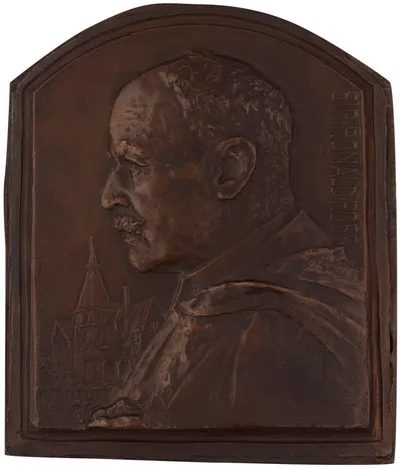
Sir Ronald Ross was a British doctor who changed the way we understand malaria. He won the Nobel Prize for Physiology or Medicine in 1902. This honor recognized his work proving that mosquitoes carry the disease. Before his discovery, people did not know how malaria spread.
Ross was born in Almora, India, on May 13, 1857. He died in London on September 16, 1932. His career began after he graduated in medicine in 1879. He joined the Indian Medical Service. He even served in the third Anglo-Burmese War in 1885.
The Breakthrough in India
Ross took leave to study bacteriology in London from 1888 to 1889. When he returned to India, he started looking into malaria in 1895. Patrick Manson helped guide this research. Manson was already working on similar ideas.
Ross focused on the Anopheles mosquito. He wanted to see if this insect played a role in the disease. In 1897, he found the answer. He discovered the malarial parasite inside the digestive tract of the Anopheles mosquito. This was a major finding.
He used sick birds to trace the full life cycle of the parasite. He saw the parasite in the mosquito’s salivary glands. This proved that malaria spreads through the mosquito bite. The disease moves from infected birds to healthy ones this way. Ross realized this likely applied to humans too.
Later Career and Legacy
Ross went back to England in 1899. He joined the Liverpool School of Tropical Medicine. He was knighted in 1911. The next year, he became a physician for tropical diseases at King’s College Hospital in London.
He later directed the Ross Institute and Hospital for Tropical Diseases. This institution was named after him. It stands as a testament to his impact.
Ross wrote more than just science papers. He wrote poems and fiction. He also published The Prevention of Malaria in 1910. This book shared his findings with a wider audience.
His work laid the foundation for fighting malaria. Knowing that Anopheles mosquitoes transmit the disease allowed for better prevention. It changed public health strategies worldwide.
The discovery did not happen in a vacuum. It built on existing knowledge. But Ross provided the missing link. He showed exactly how the parasite travels. This insight remains key today.
Why do some mosquitoes carry malaria while others do not? The answer lies in species like Anopheles. Ross identified this specific vector. His work helps us target control efforts.
Malaria is still a global health issue. But Ross’s findings made it manageable. We know how it spreads. We can block the spread. His legacy is in every prevention program.
He died in Putney Heath, London. His name is still associated with tropical disease research. The Ross Institute continues his work.
Is there a cure for malaria? Yes, treatments exist. But prevention is still the best defense. Ross showed us how to prevent it. His method relies on understanding the mosquito.
This knowledge saves lives. It reduces the burden of the disease. We owe this to one doctor’s persistence. He looked closely at a small