


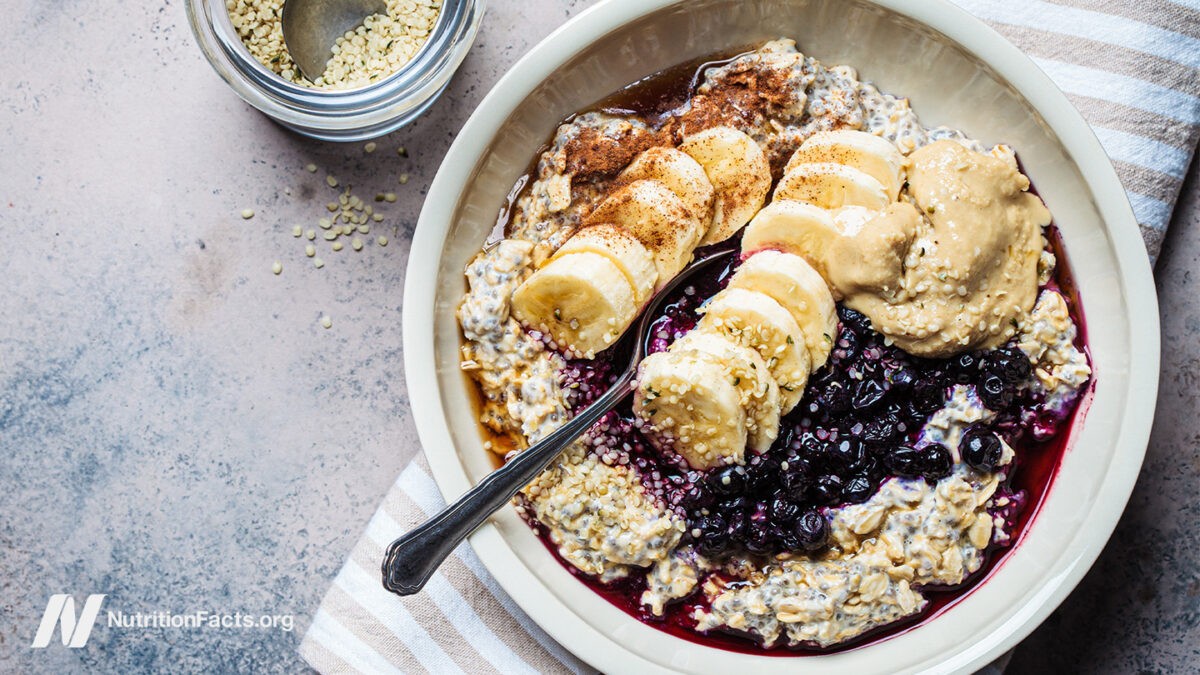
Before needles and pumps, there was a bowl.
Specifically, a bowl of oatmeal.
In 1903, Carl von Noorden proposed this to diabetics. Most doctors laughed. They were skeptical. The data came anyway, loud and clear. James B. Herrick was among the doubters until his patients improved. So much so that he declared no juvenile case should miss the cure.
Elliott Joslin called it magic.
An unsolved mystery. He didn’t know why, but he knew animal protein ruined the effect. Eat meat, the benefit vanished. Fast forward over a century. We now understand the mechanism. Animal proteins intensify insulin resistance. That’s the root of prediabetes and Type 2. Plant foods do the reverse. They sensitize your body.
Why the Gut Loves Oats
We knew whole grains helped. Decades of trials prove oats improve short and long-term sugar control while lowering cholesterol. Why? Beta-glucan. It’s a fiber that feeds your gut bacteria.
The microbiome matters. Oatmeal manipulates it.
Good bacteria eat the fiber. They spit out short-chain fatty acids. Those acids reduce inflammation. It’s not just oats. Beans do it too. Dozens of studies confirm this. Fiber promotes specific microbes. These microbes fight Type 2 diabetes. Oats act as a prebiotic. They boost Lactobacillus and Bifidobacteria. Combine that with zero animal fat or protein. It becomes clinical standard care. Hard to argue with.
Results? Fast
How fast does it work?
Fast.
A trial tested two days of oats versus simple calorie restriction. In forty-eight hours, insulin needs dropped 40%. The benefits lingered. Four weeks later, the data still looked good. Patients on this brief regimen saw their blood sugar normalize. They went home. Ate normally again. The improvement lasted for weeks.
It seems counterintuitive. A two-day fix for a chronic disease. But the gut remembers. Put people on a mix of oats, beans, veggies, and nuts. Watch their fasting blood sugar drop 25% in a month. More diverse fiber-feeders meant better hemoglobin A1c scores. Simple cause, effect.
The Trap
Here’s the danger.
If you eat like this, your meds might become poisonous.
Doctors must cut doses quickly. Or you’ll crash. Oatmeal interventions can work too well. Patients with issues sensing low blood sugar shouldn’t try it unsupervised. It requires medical oversight. The efficacy is the liability.
Not All Oats Are Equal
Processing matters. Whole grains beat broken ones. Oat groats are the baseline. Husks removed.
Slice them up? Steel-cut oats. Glycemic index under 55. Low.
Grind them roughly? Scottish oatmeal. Index sits at 55.
Roll them flat? Old-fashioned. Index stays around 55.
Steam them long. Roll them paper-thin? Instant oats.
The index jumps to 79. High. But not the worst. Some processed breakfast cereals hit the 80s and 90s. Still, stick to the cut or rolled stuff if you care about blood sugar spikes.
How to Eat It
Bland porridge? Boring.
Add berries. Add bananas. Bake apples with cinnamon for something cozy. Make overnight oats. Bake them like carrot cake the night before. Save yourself in the morning.
Want more fiber for those bacteria?
Mash cannellini beans in there. A friend swears you can’t taste them. Or can’t see them. Either way, your gut flora doesn’t care what you see. It cares what you eat.
I do a “BROL” bowl.
Barley, rye, oats, lentils. One-to-one-to-one-to-one ratio. Use oat groats. Toss a scoop into the pressure cooker with water. Boom. Texture. Then top it. Frozen cherries, cocoa powder, dates. Walnuts.
Eat well.


