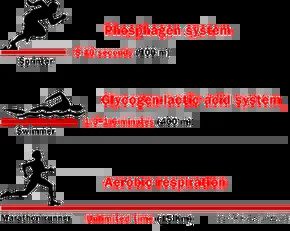
You start running. The first thing to happen is immediate. Your muscle cells burn through the ATP floating around in about three seconds. That’s it. Gone.
Then the phosphagen system kicks in. It supplies energy for another 8 to 10 seconds. This is the primary engine for rapid acceleration. Think of a 100-meter sprinter or a weightlifter. Short bursts. High intensity. If you are lifting heavy for a few reps, this is your system.
But what if you keep going?
If exercise continues longer, the glycogen-lactic acid system takes over. This powers short-distance efforts like a 200-meter dash, a 400-meter dash, or even a 100-meter swim. It’s not pretty. It’s not sustainable for hours. It’s about pushing hard for a short window.
Finally, if you don’t stop, aerobic respiration takes over. This is the engine for endurance. It powers the 800-meter dash, marathons, rowing, cross-country skiing, and distance skating.
The human body is an amazing machine.
Look closely at how it works. It shifts gears automatically. You don’t have to think about it. Your body just knows what to do.