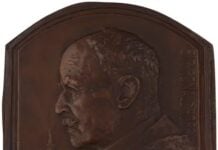
The year was 1661. Marcello Malpighi, an Italian physician and biologist, looked through a lens and changed how humans understood their own bodies. Before this moment, medicine was largely guesswork based on ancient texts. Malpighi proved them wrong by looking closer than anyone had dared.
He found the missing link in William Harvey’s theory on blood circulation. Harvey had proposed that blood moved in a circle, but critics argued that no physical connection existed between the arteries and veins. Malpighi’s discovery of the pulmonary capillary network settled the debate. The tiny vessels connected the two, proving the blood flowed continuously.
The Founder of Microscopic Anatomy
Malpighi is widely regarded as the founder of microscopic anatomy. Some even call him the first histologist. His work moved medicine from big-picture speculation to cellular reality.
He didn’t just study blood. He dissected organs with a level of detail that was revolutionary for the 17th century. His observations covered:
- The liver
- The brain
- The spleen
- The kidneys
- Bone tissue
- The deeper layers of skin, which later bore his name (the Malpighian layers)
His conclusion was bold: even the largest organs in the body are composed of minute glands. This idea laid the groundwork for modern tissue science.
Seeing the Unseen
One of his most famous discoveries involved the red blood cell. He was the first to see them clearly. More importantly, he realized they gave blood its color. This wasn’t just a visual curiosity; it was a functional insight into what makes blood, blood.
He also identified the taste buds. This anatomical finding explained the physical basis of taste, separating sensation from mere philosophy.
Beyond Human Anatomy
Malpighi’s curiosity didn’t stop at humans. He studied insect larvae, particularly the silkworm, and chick embryology. He looked at plant anatomy and saw a striking analogy between plant and animal organization. The structures were similar. Life, he suggested, shared a common microscopic blueprint.
A Short Life, Lasting Impact
Born in Crevalcore, near Bologna, in the Papal States, on March 10, 1628, Malpighi spent his career bridging the gap between observation and proof. He died in Rome on November 30, 1694.
His methods were simple but rigorous. Look. Measure. Prove. He took Harvey’s abstract theory and gave it a physical form. He turned the organ from a black box into a collection of understandable parts.
We still use his terms today. We still rely on the concept that tissues have structure. The microscope has gotten better, but the fundamental questions he asked remain the same. How does the body work? What are we made of? He started answering them.