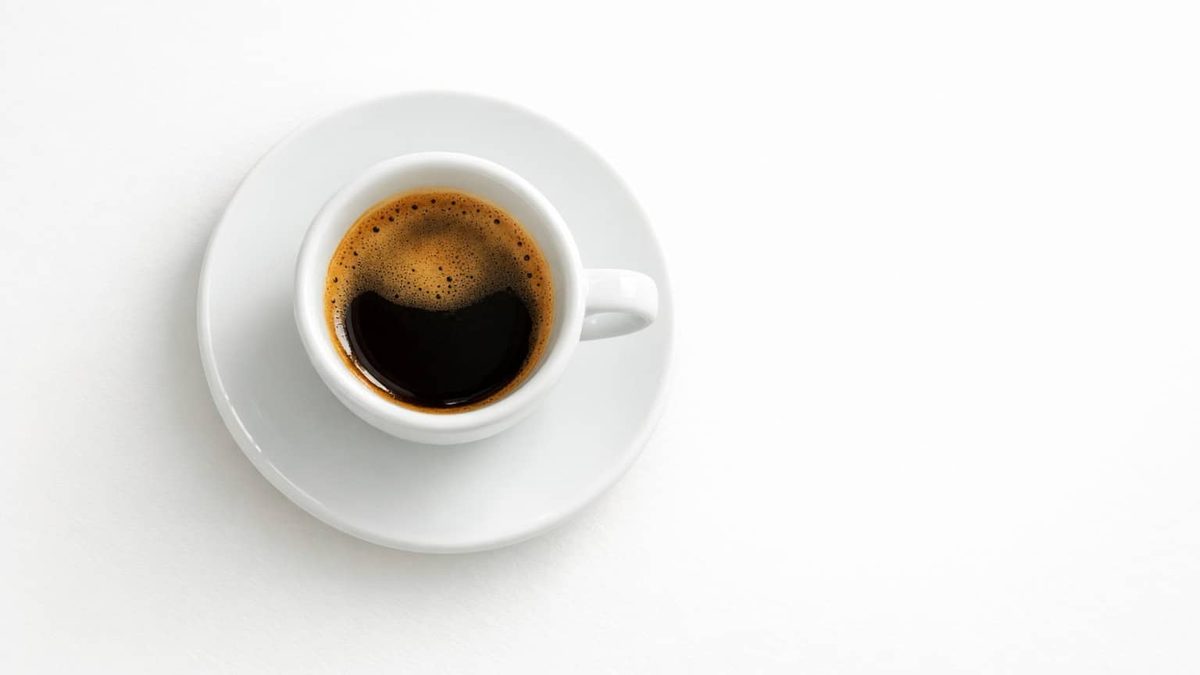
There are many claims that two to three cups of coffee a day reduces the risk of death by 17 percent. You often see it on social media and in health magazines. This seems like a simple health tip. But the story is incomplete. In fact, if you skip the second half of the story, everything changes.
The effects of coffee are dose-dependent. There are protective thresholds. The beverage helps below. Once you exceed this limit, especially after consuming 400 milligrams (about 4-5 cups) of caffeine per day, the effects stop. European health authorities have recognized this particular limitation. But no one mentions this when praising their morning espresso.
What the research really reveals
Recent research supports coffee’s protective reputation, but also reveals its limitations. Researchers at Melbourne’s Baker Heart and Diabetes Institute analyzed data from 450,000 people. The results showed that people who drank two to three servings a day were 27 percent less likely to die. These drinkers had a 20% lower risk of cardiovascular disease.
Other data also support this. A meta-analysis of more than 1.1 million participants published in Diabetology estimated that each extra cup of coffee each day reduces the risk of developing type 2 diabetes by approximately 6%. These numbers are impressive. They have proven the reputation of this drink as an ally of health.
However, the relationship between coffee and mortality is an inverted U-shaped curve. For best results, drink 3-4 cups a day. More is not necessarily better. After passing this plateau, the gradient decreases.
Key insight: Beyond three cups, there is no additional mortality benefit. After the plateau is a danger zone.
Consuming more than 400 milligrams of caffeine a day can raise your heart rate and blood pressure. This increases the risk of high blood pressure and cardiovascular events. Taking more than 600 mg can cause a significant rise in blood pressure within minutes. 600 milligrams is equivalent to 6 shots of espresso. Some heavy drinkers hit this number without realizing it.
Office machine trap
This is where the confusion begins. When research refers to a “cup”, it usually means a classic espresso. Brew time is short. A 3-5 cl cup of espresso contains about 80-100 mg of caffeine. This is manageable.
The problem is in the office filter. Drip coffee contains more caffeine than espresso because it is brewed in large quantities for a longer time.
On average, 20-25 cl of drip coffee contains 135-150 milligrams of caffeine.
A large cup of coffee in the Lungo mode or a long pull from the tabletop coffee machine contains as much caffeine as two espressos.
Drinking three large drinks exceeds the 400 mg threshold.
Exceeding this limit may cause side effects. Anxiety. Palpitations.
Indigestion. insomnia. The caffeine content varies greatly depending on the manufacturing method. This is not a small detail. This variable turns the protective potion into something harmful. Usually within the same day. Often the consumer doesn’t even notice it.
When your body gives an alarm
The European Food Safety Authority (EFSA) says that consuming more than 400 mg of caffeine per day can cause anxiety and behavioral changes. In France, about 30% of the adult population exceeds the caffeine consumption level linked to anxiety. That’s one in three people. Not a minority.
Sleep is often the first silent victim. When you drink coffee at night, adenosine, a calming chemical in your brain, stops working properly. Caffeine remains active in your body for 3-5 hours. This means that for most people, coffee at 4pm will have an effect well into the night. Most experts recommend not drinking coffee after 2 or 3 p.m.
Some profiles require significantly less than the general limit. According to the French Agency for Food, Environmental and Occupational Safety (ANSES), pregnant women are advised to consume no more than 200 milligrams of caffeine per day, which is the equivalent of two cups of drip coffee. The margin of error was even smaller in people with uncontrolled hypertension, pregnant women, or people with certain heart arrhythmias.
Your genes matter
There are hidden variables in all of this. Genes determine whether a person metabolizes caffeine quickly or slowly. This property affects how quickly the body eliminates the stimulant. The slower the metabolism, the longer the effects last. Risk accumulates faster. Doses well below 400 mg can reach the threshold for side effects.
We often think of caffeine as a standardized drug. it is not. It interacts with your specific biology. It interacts with the brewing method. It interacts with the time of day you drink.
The numbers are clear. 2-3 cups have a protective effect. Four or five cross the line. The question is, Do you know what’s in your cup? And can your body withstand the load.
It’s not just caffeine that offers benefits
This protective effect remains regardless of whether you drink caffeinated or decaf coffee. This distinction is important. This suggests that caffeine is not the only architect of health. Rather, it is a whole mixture of compounds that work synergistically. Think improved insulin sensitivity. Consider reducing oxidative stress. Look at how polyphenols influence your gut microbiome. Caffeine has received a lot of attention, but at the same time its achievements have been significant.
How roasting and additives change the equation
Light roasting preserves more bioactive compounds. Chlorogenic acids and polyphenols are more resistant to heat in lighter beans, which can further increase positive results. Preparation is key here in terms of health indicators.
Two to three cups of black coffee a day lowers the risk of death. The catch? You must drink it black. Adding sugar, milk or cream can weaken the protective effect. A sweetened morning latte is not metabolically equivalent to a double espresso. One supports cellular health. the other might just add empty calories can negate the benefits.
Why your genetics dictate your tolerance
Genetics play a quiet but powerful role in how you process your brew. Variations in the CYP1A2 gene determine the rate at which caffeine is metabolized. It’s not just a jitteriness. It alters the actual physiological effects.
If two people drink the same amount of coffee, absorb different effective doses. One person might clear caffeine twice as fast and tolerate higher doses without problems. The other accumulates it and suffered from anxiety and palpitations after just one drink. The commonly mentioned daily limit of 400 mg is a safe average and not a general rule. Depending on your body’s specific enzyme activity, one person’s safety limits another person’s stress threshold.
Source: lasanteauquotidien.com | polesantetravail.fr