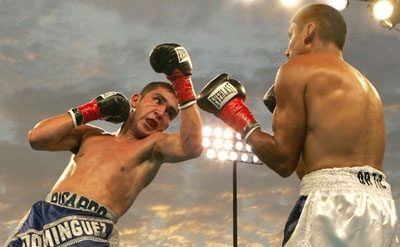
Boxing is deceptively simple. Two people. Fists only. Until one falls. It’s a sport stripped of pads, helmets (in the pro game), and safety nets. You step into the ring and you are entirely on your own. But don’t let that simplicity fool you. Underneath the basic mechanic of punching someone else lies a labyrinth of rules, history, and sheer brutality that has captivated audiences for centuries. Add in the corruption, the larger-than-life personalities, and the very real threat of permanent injury, and you get something far more compelling than just a test of who hits harder.
If you’re trying to understand the basics of boxing, you need to look past the knockout. The sport is governed by a strict code of conduct designed to keep the fight from descending into a street brawl. While the core concept remains the same, the rules shift depending on whether you’re watching the Olympics or a heavyweight title fight.
The Arena and the Rules of Engagement
The stage for this violence is a raised, square platform. It’s not just a mat; it’s a layered system of canvas over an inch of padding, designed to absorb impact. The ring is enclosed by flexible ropes anchored to steel posts at the corners. Size matters here. In smaller venues, you might see a ring that’s just 16 feet to a side. At the Olympic level, the ring can expand to 20 feet in diameter. Some professional organizations, aiming for spectacle, allow rings up to 25 feet wide.
Inside those ropes, boxers are bound by prohibitions that keep the match civilized. You cannot strike below the belt. You cannot kick. No elbow strikes, no forearm shoves, and definitely no slaps with the inside of the hand. Headbutts are out. Biting? Well, Mike Tyson proved in the 1990s that you actually have to ban it. Grabbing the ropes to rest your weight is a foul. And if you poke an eye with your thumb, you’re asking for trouble. Muhammad Ali learned this the hard way in the 1974 “Rumble in the Jungle,” when George Foreman’s thumb left Ali’s right eye swollen and red after the fight.
“A boxing match is not a brawl or a street fight. There are rules to designate a winner, keep the match interesting for fans and reduce the chance of serious injury to the boxers.”
Violate these rules, and the referee or judges will deduct points. Do it repeatedly, or do it so flagrantly that you endanger your opponent, and you get disqualified. It’s a thin line between aggressive boxing and illegal fouling.
Structure of the Fight
Time is the other enemy. Professional championship bouts are scheduled for 12 rounds. Each round lasts three minutes, followed by a one-minute rest period where coaches can work magic (or panic). Historically, these fights went 15 rounds. The change came after the tragic death of Kim Duk-koo in 1982, a reminder of the sport’s lethal nature. Lower-ranking pro fights might be cut to 10 rounds or fewer.
Amateur boxing, the path to the Olympics, is different. Rounds are shorter—two minutes each—and there are fewer of them. Typically, you’re looking at three, four, or five rounds depending on the stage of the competition. Junior divisions can have even shorter bursts of action.
Gear and Protection
The gloves are the most iconic part of the sport, but they serve a dual purpose. Made of padded leather, they are designed to protect the wearer’s hand bones from shattering, not just to soften the blow to the opponent. Underneath the gloves, the hands are wrapped in athletic bandages, tightly regulated to ensure no hidden weapons are concealed.
In amateur boxing, headgear is mandatory. It doesn’t prevent concussions, but it does minimize cuts and scrapes. In the professional ranks, headgear is banned. Why? Because it can encourage riskier behavior, and proponents argue it doesn’t stop the rotational forces that cause brain trauma.
How Do You Win?
So, how do you actually take home the belt? Winning a boxing match isn’t just about knocking your opponent out. There are several ways to secure victory, each with its own terminology.
- Knockout (KO): The referee stops the fight because a boxer cannot continue after a nine-count. This is the most decisive victory.
- Technical Knockout (TKO): The referee stops the fight because one boxer is taking too many unanswered punches, is unable to defend themselves, or has sustained an injury that makes continuing unsafe. It can also happen if a boxer’s corner throws in the towel.
- Decision: If the fight goes the full distance, three judges score the rounds. Each judge awards points based on clean punching, ring generalship, defense, and aggressiveness. If all three judges score it for one fighter, it’s a unanimous decision. If two judges score it one way and one scores it even, it’s a split decision. If all three judges score it even, it’s a draw.
- Disqualification (DQ): If a
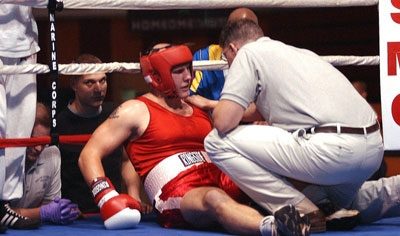

A knockout isn’t just a punch landing. It’s a specific sequence of events designed to end the fight instantly. The goal? Drop the opponent so hard that they can’t beat the referee’s count of ten. If they stay down, it’s a KO. Victory goes to the one who remains standing.
But the moment a fighter hits the canvas, the rules tighten. The standing boxer must immediately retreat to a neutral corner. Not the one where their trainer waits. Not the other corner. Somewhere in the middle. Out of the way.
Once down, the referee steps in. They are the only non-combatant allowed in the ring. Their job isn’t just to count. It’s to assess. Can the downed fighter stand? Can they defend themselves? If yes, the fight resumes. But not always immediately.
The Eight-Count Rule
Many rule sets mandate an eight-count. Even if the knocked-down boxer bounces to their feet like nothing happened, the referee forces a pause. They count to eight before allowing action to resume. This isn’t to punish. It’s to ensure the fighter isn’t still dazed. A quick rise doesn’t always mean clarity.
Sometimes, the damage is cumulative. In some jurisdictions, three knockdowns in a single match trigger a technical knockout. TKO. The fight stops. The winner gets a KO on their record, technically, though the stoppage was procedural rather than a final blow.
TKOs happen for other reasons too. The referee sees a fighter is too hurt. The ringside doctor steps in and waves it off. The trainer throws in the towel. Or the fighter themselves admits they can’t continue. It’s ugly, but it’s part of the sport’s safety net.
Saved by the Bell?
Here’s where rules diverge. In some systems, a knocked-down boxer can be “saved by the bell.” If the round ends while they’re down, but before the ten-count finishes, the fight pauses. The fighter goes to their corner. They get their one-minute rest. The count doesn’t matter because time expired.
Other systems don’t care about the bell. The count continues. Even if the round is over, if the referee hasn’t reached ten, the fighter is still on the clock. Hit ten, and they lose. It’s a harsher standard. Less mercy. More precision.
When No One Falls
Most fights don’t end with a body on the mat. Sometimes, it goes the distance. No knockouts. No TKOs. Just three (or more) rounds of fighting. Then, the judges decide.
Professional bouts typically use three judges. Olympic boxing uses five. Fewer or more, the logic is the same. Judges watch each round. They decide who won it. Points are assigned based on clean punching, ring generalship, defense, and aggression. Variations exist in how points are allocated, but the core idea is constant: win the round, get the point.
At the end of the match, those points are tallied. The boxer with the highest total wins by decision. Sometimes it’s unanimous. All judges agree. Sometimes it’s split. Two say one fighter, one says the other. Rarely, it’s a draw. Everyone sees the same fight, but the numbers don’t add up to a clear winner.
“The points for all the judges are tallied at the end of the match, and the boxer with the most points (or rounds) is declared the winner.”
Decisions feel less violent than knockouts,
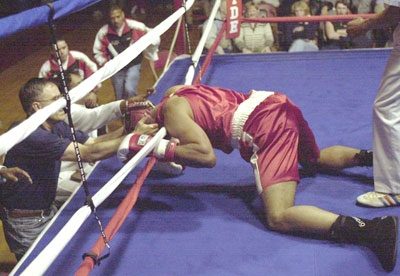

Scoring a round isn’t just about who threw the most punches. It’s about precision. Olympic judges rely on electronic scoring systems to count “scoring punches.” These are specific strikes delivered with the knuckle side of the closed fist. They must land on the front or sides of the opponent’s torso, above the belt, or on the head. If you miss the mark, it doesn’t count.
Fouls complicate things. Committing a foul doesn’t just result in a warning. It hands your opponent two extra points for that specific round. This penalty can flip the tide of a close contest.
Pro boxing is messier. There’s no machine to track every jab. Judges use human eyes. They look for scoring punches, sure. But they also weigh aggression. They consider ring control. They assess who dictated the tempo. And they look at damage.
Consider this scenario. Red boxer lands a dozen clean jabs. They’re textbook. But Blue boxer waits. Late in the round, Blue lands two hard hooks. Red stumbles. Red’s eyes glaze over. The judges might hand the round to Blue. Why? Because the damage outweighed the volume. Different judges will score this differently. One might call it a 10-9 for Red. Another might give it to Blue.
The point systems themselves are straightforward. Whether it’s 10-point must, five-point, or twenty-point, the logic holds. In a standard 10-point round, the winner gets 10. The loser gets 9.
If there’s a knockdown? Or one fighter utterly dominated? The score shifts. It becomes 10-8.
If you can’t decide who won? It’s a 10-10 draw.
Deciding the Winner: The Four Outcomes
When the bell rings and the scores are tallied, one of four things happens.
A Unanimous Decision means all three judges agreed. They gave the win to the same boxer. No controversy here.
A Split Decision is tighter. Two judges vote for Boxer A. One judge votes for Boxer B. The winner is declared, but the margin is razor-thin.
A Majority Decision involves a draw. Two judges score the fight for Boxer A. The third judge calls it even. Boxer A wins, but barely.
A Draw is rare. One judge picks Boxer A. One picks Boxer B. The third calls it even. Neither fighter gets the W.
Then there’s the Majority Draw. Even rarer. Two judges call it a draw. One judge picks a winner. Technically, no one wins the match. It’s a stalemate.
Weighing In: Divisions and The Belt Chaos
Safety dictates the weight classes. It’s been this way for a century. You don’t want a 200-pound fighter punching a 140-pound fighter. The power difference comes from mass and muscle. A mismatch like that causes serious injury. It’s lopsided. It’s dangerous.
The divisions are mostly uniform globally. But snaking through the rankings are “intermediate” divisions. These sit between the main weight classes. The World Boxing Association (WBA) and World Boxing Council (WBC) list them as “super” divisions. The International Boxing Federation (IBF) and World Boxing Organization (WBO) call them “junior” divisions of the class below.
Super Bantamweight? IBF calls it Junior Featherweight. Same limit. Different label. Confusion ensues.
Inside each division, there is a World Champion. Defined by a sanctioning body. Represented by a decorative belt.
But here’s the problem. There are four major bodies. WBA. WBC. IBF. WBO. Each crowns its own champion. You can have a WBA Featherweight Champion who is different from the IBF Featherweight Champion. So who is the real champion?
It depends on who you believe is more prestigious.
Promoters love this chaos. They set up “unification matches.” Fighter A holds the WBC belt. Fighter B holds the IBF belt. They fight. The winner takes both. They unify the division.
The four major organizations recognize each other’s titles now. They confer special status on unifiers.
Hold two belts? You’re a Unified Champion.
Hold three? Super Champion.
Hold all four? You are Undisputed. The true king of that weight class.
The Road to the Title
There is no single global governing body. No one police force for boxing. The influence of WBA, WBC, IBF, and WBO shifts by region. In the UK, the British Boxing Board of Control (BBBC) holds sway. In Nevada, it’s the State Athletic Commission (NSAC).
These local boards enforce regulations. They don’t publish global rankings. Dozens of smaller organizations exist worldwide too. So how does a fighter get a title shot?
He climbs the ranks.
Sanctioning bodies publish monthly rankings. The current champion sits at the top. Below them are the contenders.
How do you climb? You fight harder opponents. Your ranking depends on your win-loss record. But it’s not just wins. It’s the difficulty of the opposition. How convincing were your victories?
Beat a ranked fighter convincingly? You move up.
Beat a lower-ranked fighter by knockout in the first round? You don’t move much.
The top contenders earn a shot at the crown. The title holder is obligated to defend their belt. Usually once every nine months. Sometimes once a year.
If one contender stands out? The champion and the challenger negotiate the fight. Managers and promoters handle the money and dates.
If several contenders are equally matched? They fight each other first. Elimination matches. Over several months. One fighter emerges. That fighter gets the title shot. The rest go home.
The Mechanics of the Stand
Forget the myth that boxing is just swinging wild haymakers in a circle. That’s how careers end, usually before the first bell rings. Real boxing is a chess match played with kinetic energy, built on two pillars: attack and defense.
Defense starts with the stance. For a right-hander, feet are shoulder-width apart, right foot trailing slightly. Left hand stays out, a few inches from the face, elbow bent. Right hand hugs the chin, elbow tucked. This isn’t just posture; it’s a springboard. You block, you dodge, and you’re ready to fire. Sure, you’ll see fighters drop their hands lower. Sometimes it’s a trap. Sometimes it’s laziness. Usually, it’s both.
Early in a bout, you’ll see the bob and weave. Bouncing on the balls of the feet, shifting weight side to side. It turns you into a moving target, annoying to track. But don’t count on it lasting. After six or seven rounds, lungs burning, legs heavy, the bobbing stops. The defense slows. The openings appear.
Four Pillars of Attack
It feels like there are endless variations, but the modern arsenal boils down to four specific strikes. Anything else is just ornamentation.
- Jab : The leading hand (left for orthodox boxers). Straight. Low power. High utility. It’s how you measure distance, test reactions, and chip away at an opponent’s rhythm. Enough jabs, and the body breaks.
- Hook : A lateral arc. Fist travels out to the side then snaps back, connecting with the temple or ribs. Powerful. Can be thrown with either hand.
- Uppercut : Almost exclusively a right-hand weapon. Arm drops, elbow pulls back, fist drives upward in a tight arc. Designed to slip under an opponent’s guard or punish them when they’re leaning in.
- Cross : The signature right-hand punch. Starts near the chin, crosses the body in a straight line. Power comes from the shift—weight moves forward, right shoulder drives. It’s the backbone of the how boxers generate power in a straight line.
Individually, these hurt. Together, they’re devastating. Combinations are key. The jab-cross is the bread and butter. Two punches. Quick. Disorienting.
Defining the Style
You can know the moves and still lose if you don’t have a style. That’s the framework. The personality. There are three broad categories, though great fighters often blur the lines.
The Boxer (or Outside Fighter). Think Sugar Ray Leonard. Muhammad Ali. They value footwork and strategy over brute force. They stay on the perimeter, beyond reach, waiting for a slip. Then they dart in, fire a combination, and vanish. They often win by decision, outpointing opponents who can’t touch them.
The Slugger. George Foreman. Late-career Mike Tyson. These guys don’t care about volume. They care about impact. Fewer punches, but each one carries the weight of a sledgehammer. One clean shot. Knockout. It’s a high-risk, high-reward game.
The Inside Fighter (or Swarmer). Joe Frazier. Roberto Duran. Prime Mike Tyson. They don’t wait. They charge through the guard, absorbing shots to get into range. Once inside, it’s a barrage. Aggressive. suffocating. They force the opponent into corners and work the body.
The Grind Behind the Gloves
Hollywood loves the montage. Running up stairs. Hitting the bag. But the reality is simpler and harder. Boxers need lung capacity that defies logic. Try throwing fast punches at the air for three minutes. Now try doing it while jogging in place. Your arms will feel like lead. Your lungs will scream. That’s why the training starts with running. Miles of it.
Then comes the rope for agility. The heavy bag for power. The pads for precision. Weights for mass. Sparring for the psychological toll of taking hits.
Today, it’s more complex. High-tech gyms. Biometric monitoring. Ballet for balance and core strength. Diets calculated to the gram. The sport has evolved, but the core truth remains: you are only as good as your ability to sustain that intensity when your body is begging you to stop.
And when it gets late? When the bobbing stops and the hands drop? That’s when the style matters most.
The Evolution of Rules and the Shift to Las Vegas
The transition from chaotic brawls to a regulated sport wasn’t immediate. It took nearly two centuries for boxing to shed its gladiatorial roots. James Figg, the first recognized champion, operated in a bare wood ring fenced off by timber. Jack Broughton followed, earning the title of the father of boxing rules. He introduced hand wraps and basic techniques, but the real structural shift came much later.
In 1866, the Marquis of Queensberry sponsored matches under a new code. This wasn’t just a suggestion; it became the global standard. The Queensberry Rules mandated padded gloves, three-minute rounds, and a ten-second count for knockdowns. They also banned wrestling-style moves, effectively separating boxing from other forms of combat. For decades prior, fights were rule-light, resembling modern mixed martial arts more than the prizefighting we recognize today.
Popularity has never been static. While England laid the foundation, the United States saw the sport’s peak in the 1930s. But the mid-to-late 20th century brought fragmentation. Attempts to create a single governing body failed. By 2007, the landscape remained a confusing patchwork of competing organizations. No single entity held primacy.
Geography also shifted. New York City, once the epicenter with weekly bouts at Madison Square Garden, lost its crown. Las Vegas took over. Why? Legal sports betting turned fight nights into lucrative side businesses. The influx of cash fueled an era of multi-million dollar purses and pay-per-view broadcasts. The sport became less about local pride and more about global entertainment value.
The Human Cost: Injuries and Fatalities
You can’t talk about boxing without addressing the physical toll. It’s a sport built on impact. Even with modern protective gear and stricter medical protocols, the risk remains inherent. Concussions are the most common concern, leading to chronic traumatic encephalopathy (CTE) in former fighters. Retinas detach. Jawbones fracture. The list of long-term health issues is extensive.
Fatalities, while rare in professional bouts due to strict oversight, still occur. Amateur boxing has seen its share of tragic incidents as well, prompting rule changes like reducing headgear reliance in some circuits. The debate over safety continues. Some argue that better training and earlier detection of brain trauma can mitigate risks. Others believe the core nature of the sport makes it inherently dangerous.
Where to Watch and Follow Modern Boxing
With no single governing body, finding clear information about championships can be tricky. The major sanctioning bodies—WBA, WBC, IBF, and WBO—each crown their own champions. This means a “world champion” might only hold titles in three out of four organizations. Fighters often face complex rankings and mandatory defenses that vary by group.
For fans looking to follow the action, the landscape is fragmented. Big events are split between major promoters like Top Rank, Golden Boy, and Matchroom. Streaming services have also entered the fray, offering pay-per-view options that bypass traditional cable. The key is to know which promoter holds the rights to the fighters you want to watch.
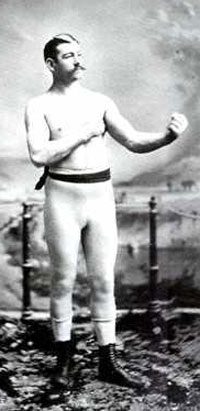

Boxing stands alone in combat sports for one brutal metric: the quantification of damage inflicted. When a fighter hits the canvas, it is rarely just a loss of balance. More often, it is the physical manifestation of repeated, high-impact strikes to the head that leave the athlete dazed, disoriented, or fully unconscious. Even a single incident can cause permanent neurological harm. Given that professional boxers may compete dozens of times over their careers, the cumulative toll is staggering. This reality has led major medical organizations globally to call for a complete ban on the sport. The British Medical Association, American Medical Association, and Australian Medical Association all maintain standing policies opposing boxing entirely.
The Reality of Fatal Injuries and Long-Term Brain Damage
The dangers fall into two distinct categories: acute trauma that can lead to death, and chronic, cumulative brain damage that degrades life long after the gloves come off. The history of the sport is littered with tragedies. Boxers like Gerald Mclellan, Leavander Johnson, Jimmy Doyle, and Benny Paret died in the ring or shortly after due to ring injuries. Duk-Koo Kim’s death was so traumatic that both the referee and his mother committed suicide in the aftermath. Female boxer Becky Zerlentes also lost her life to ring injuries. As of late 2006, more than 1,300 boxers had died from fighting injuries. Between 1890 and 2019, that number rose to 1,876 direct fatalities.
“There is enough medical evidence to support the claim that boxing leads to long-term brain damage.”
Harder to measure, but no less devastating, is the deterioration of fighters’ brains after they retire. The link between boxing and long-term neurological decline is well-documented, altering the lives of countless athletes who survive the ring only to face a slower, harsher decline outside of it.
Corruption, Gambling, and the Perception of Unfairness
Beyond the physical toll, boxing is plagued by corruption. Since the era of bare-fisted fights in England, accusations of match-fixing have persisted. Fighters have been charged with “throwing” fights—intentionally losing to satisfy bettors. This corruption is inextricably linked to gambling. The legal sports betting industry surrounding high-profile fights in Las Vegas does little to dispel the perception of impropriety, if not the actual presence of it.
Compounding the issue is the economic disparity. Managers and promoters reap huge sums while sending poor, urban kids through a grueling, brutal career. When you add the complex web of bribes and payoffs to promoters and gaming officials in various regions, the sport’s integrity comes under heavy scrutiny. It is no wonder critics voice such strong opposition to the entire enterprise.
Boxing FAQ
What moves are illegal in boxing?
Striking below the belt, hitting a downed opponent, kicking, elbowing, forearming, slapping, head-butting, biting ears, grabbing ropes, poking eyes with a thumb, wrestling, grappling, or excessive holding.
What are the main styles of boxing?
Three primary styles dominate: The Boxer, The Slugger, and The Inside Fighter.
How much did Mike Tyson make in his career?
Forbes reports Tyson earned approximately $685 million throughout his career.
Why is boxing so popular?
The sport’s center shifted from New York City to Las Vegas, where legal sports betting created a lucrative side business. This influx of money fueled an era of multi-million dollar purses and pay-per-view television.
Sources
- Andrea, Sam and Fleischer, Nat. An Illustrated History of Boxing. Citadel, (January 11, 2002). 978-0806522012.
- Australian Medical Association. “Boxing ring no place for kids – AMA.” http://www.ama.com.au/web.nsf/doc/WEEN-5T336K
- BBC Sport. “US woman dies after boxing match.” April 5, 2005. http://news.bbc.co.uk/sport1/hi/boxing/4414235.stm
- British Medical Association. “Boxing – the BMA’s position.” August 2006 briefing. http://www.bma.org.uk/ap.nsf/Content/BoxingPU
- Durant, John. The Heavyweight Champions. Hastings House, 1976. 978-8038302037.
- Elliot, Victoria Stagg. “AMA pulls no punches, reiterates boxing ban.” American Medical News, July 2002. http://www.ama-assn.org/amednews/2002/07/08/hlsb0708.htm
- Gerbasi, Thomas. “For Those Who Died.” Jan. 10, 2003. http://www.maxboxing.com/Gerbasi/gerbasi011003.asp
- Luhning, Aaron. “Boxing Styles: Swarmer, Slugger, Boxer, Boxer-Puncher.” http://www.how-to-box.com/boxing/boxing_styles
- Mullan, Harry. Boxing: The Complete Illustrated Guide. Carlton Publishing Group (August 1, 2003). 978-1842228098.
- Svinth, Joseph R. “Death under the Spotlight: The Manuel Velazquez Boxing Fatality Collection.” Journal of Combative Sport, Jan. 2007. http://ejmas.com/jcs/jcsart_svinth_a_0700.htm
- U.S.A. Boxing. “Technical Rules.” http://www.usaboxing.org/TechnicalRules.pdf
- World Boxing Association. “Official Ratings As of February 2007.” http://www.wbaonline.com/ratings/rankings/2007/wba0207.pdf
- “Amateur Boxing Linked To Brain Cell Injury.” Journal of the American Medical Association, Sept. 18, 2006. http://www.sciencedaily.com/releases/2006/09/060915204035.htm