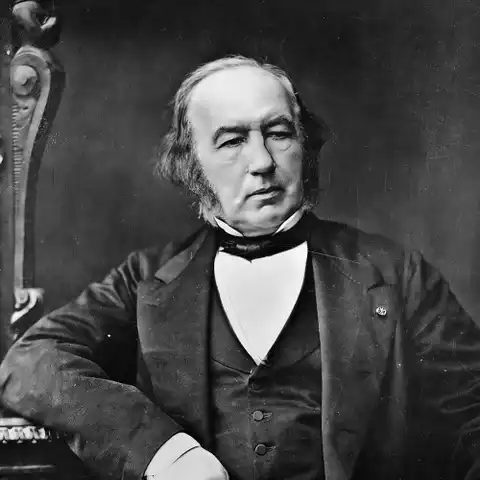
He was a rebel with winemaking blood, born in the Beaujolais region of France. He failed his baccalaureate. He failed the demanding anatomy and physiology competitive exam. But he continued. He became a pharmacy assistant, fell in love with medicine and never looked back. He didn’t just learn the rules. He bent them.
Everyone calls Claude Bernard the father of experimental medicine. Before him, doctors relied on observations. They trusted in experience and tradition. Bernard preferred the laboratory. He wanted proof.
The medical world of the time was obsessed with vitalism. According to the theory, life is powered by a mysterious “life force”. This force is assumed to operate outside the laws of physics and chemistry. Bernard, an agnostic, wasn’t buying it. He believed that living things follow the same natural laws as everything else.
Testing on animals before humans
He turned to physiology. He insisted that the experiments had to be done on animals first. Only then should you try something for people. His coworkers didn’t listen at first. They called him crazy.
He didn’t stop. He became a professor. He taught at the Collège de France. He taught at the Sorbonne. He taught at the National Museum of Natural History. He built a new generation of scientists who saw the value of experimentation.
In 1841 he began working with François Magendie. Magendie was his mentor. When Magendie died in 1855, Bernard took over his chair at the College of France.
His most famous book was published in 1865. It was titled “Introduction to the Study of Experimental Medicine”. In it, he explained his method. To observe. Form a hypothesis. Take the test. He believed in the progress of medicine. He believed in science.
Internal milieu
Bernard introduced the idea of “milieu decoration”. This is the internal environment of the body. He described it as a state of equilibrium. He called it homeostasis.
“The permanence of the internal environment is a prerequisite for a free and independent life.”
He wrote this in 1872. It was a radical change in thinking. In the past, people thought that each function belonged to a specific organ. Bernard proved otherwise. Several organs can perform one task. Some functions take place throughout the body.
He showed how pancreatic secretions affect digestion. He discovered that the liver produces sugar. He studied the causes of diabetes. He studied how the body regulates temperature.
These weren’t just minor changes. They represented fundamental changes in our understanding of biological systems.
Recognition and legacy
Bernard contributed to a significant turning point in the history of medicine. He was recognized during his lifetime. The Académie des Sciences awarded him a prize in 1854. The Academy of Medicine awarded him in 1861. He entered the Académie française in 1868.
He died on February 10, 1878. The state gave him a national funeral. It was a rare honor. It showed that his thinking had won. The era of pure observation was coming to an end. The trial period had begun.
His work laid the foundation for modern biology. We still use his methods. We still test on animals. We still consider the body as an interaction system. We continue to respect the balance of the internal environment.
It wasn’t easy for him. He failed the exams. He faced rejection. He worked against the prevailing philosophy of his time. But he stuck to his words. He trusted the evidence.
The results are now available in our hospitals. In our treatments. In our understanding of disease. Bernard didn’t just study life. He helped us understand how it works.
There is still so much we don’t know. The body is still complex. But the way forward is clear. To observe. Make a hypothesis. Check. Repeat.