As we age, maintaining strength and mobility becomes increasingly important. While building muscle mass might not be everyone’s top priority after 50, functional fitness is key to enjoying an active lifestyle. This means focusing on exercises that support everyday activities like playing with grandchildren or tending your garden.
Stronger upper body muscles are crucial for good posture and balance, both of which decline naturally with age. They also help prevent injuries, especially falls, a significant concern for older adults.
This article presents a targeted 20-minute upper body workout designed to improve strength and stability in key areas: your shoulders, back, chest, and arms.
A Workout Plan Tailored to You
This routine consists of six exercises performed in a circuit format – meaning you move from one exercise directly into the next with minimal rest between them. Bodyweight exercises are done for as many repetitions as comfortable, aiming for 8-10 at first and gradually increasing to 12-15. Dumbbell exercises target each side separately, with 12-15 repetitions on each side per set.
After completing one circuit, take a short break of 45 to 60 seconds. Start with two circuits and progress to three or four within the 20-minute timeframe as you build strength.
The Exercises: Building Strength From Within
1. Scapular Push-Up: This exercise focuses on the often-overlooked muscles that stabilize your shoulder girdle, crucial for mobility and stability at any age but especially important after 50.
- Start on all fours with hands under shoulders and hips over knees.
- Keep your core engaged and arms straight. Pull your shoulder blades together, squeezing them as you gently lower your chest towards the floor.
- Push back up by drawing your shoulder blades apart, lifting your upper back slightly.
2. Plank Shoulder Tap: This exercise challenges both your core and shoulders while improving stability.
- Begin in a high plank position with hands under shoulders, legs extended behind you. Press firmly into the floor through your hands and engage your glutes.
- Lift one hand off the floor and tap the opposite shoulder. Return to plank, lift the other hand, and tap the opposite shoulder. Alternate taps for 45-60 seconds.
3. Alternating Chest Fly: This exercise strengthens the chest muscles while requiring controlled movement and core engagement.
- Lie on your back with knees bent, shins parallel to the floor, and hold a dumbbell in each hand. Keep arms straight overhead, forming a straight line from wrists through elbows and shoulders.
- Slowly lower one arm to the side while keeping the other arm stable. Return to starting position and repeat with the other arm. Alternate for 12-15 repetitions per side.
4. Single-Arm Row: This exercise targets your back muscles and core stability.
- Stand with feet shoulder-width apart, holding a dumbbell in one hand. Hinge at your hips, keeping your spine straight and core engaged while leaning forward slightly.
- Keeping the other arm by your side, pull the weight up toward your rib cage, squeezing your shoulder blade together. Lower the weight back down. Repeat for 12-15 reps before switching sides.
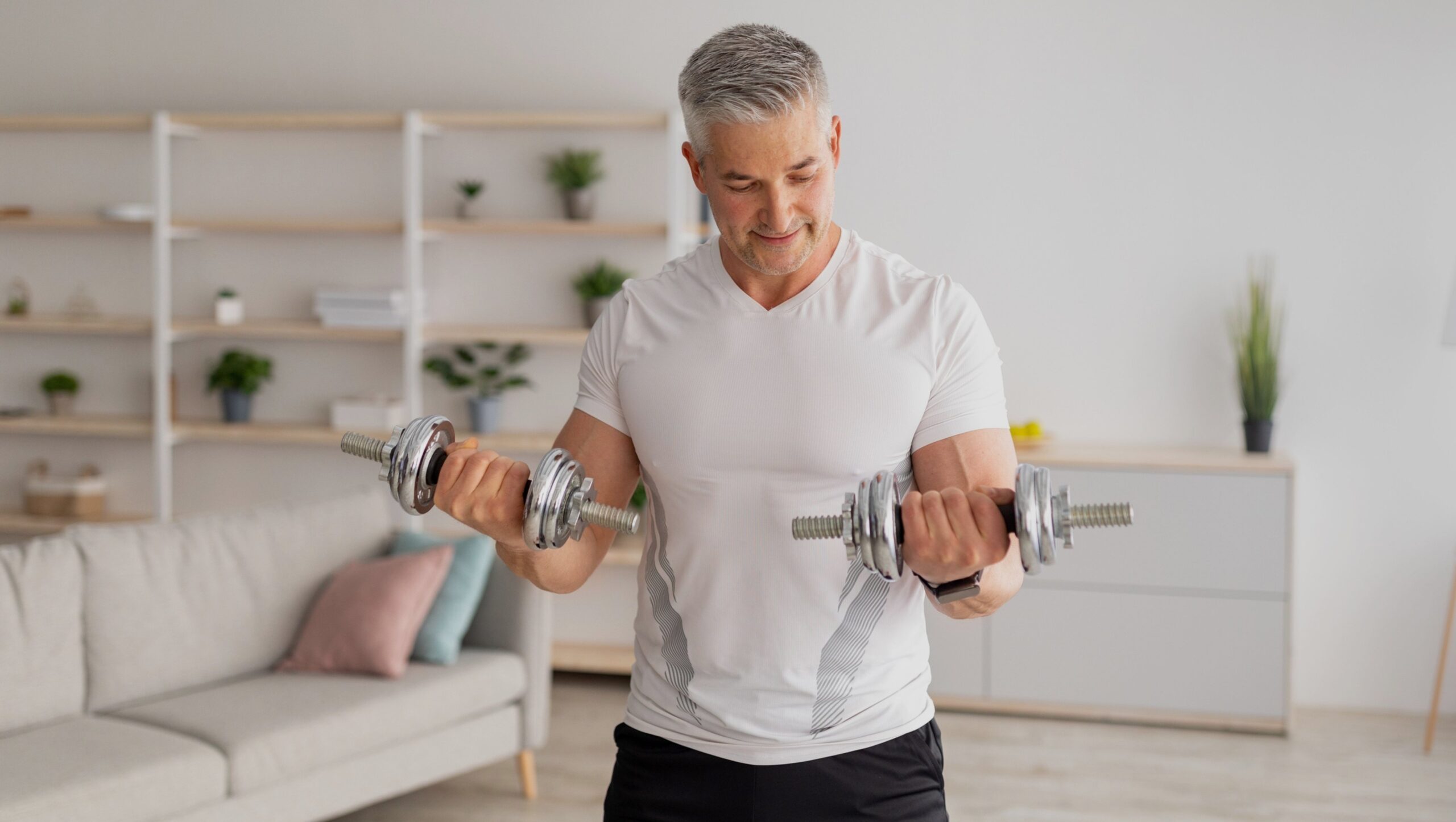
5. Opposite Arm Curl and Press: This exercise combines two movements – a bicep curl with the left arm and an overhead press with the right – requiring coordination and core activation.
- Stand with feet shoulder-width apart, holding a dumbbell in each hand. Begin with your left arm down by your side and your right arm in front of you at shoulder height (front rack position).
- Engage your core and curl the weight up towards your left shoulder while simultaneously pressing the right arm straight overhead. Lower both weights to their starting positions and switch sides for 12-15 repetitions per side.
6. Assisted Chin-Up: Optional for building even more upper body strength.
Many gyms offer assisted chin-up machines that make this challenging exercise accessible. If available, this is a great addition to the routine.
Stay Strong and Active for Years to Come
By prioritizing functional strength training as we age, we can maintain independence, enjoy our favorite activities, and live life to the fullest. Remember to consult your doctor before starting any new exercise program.