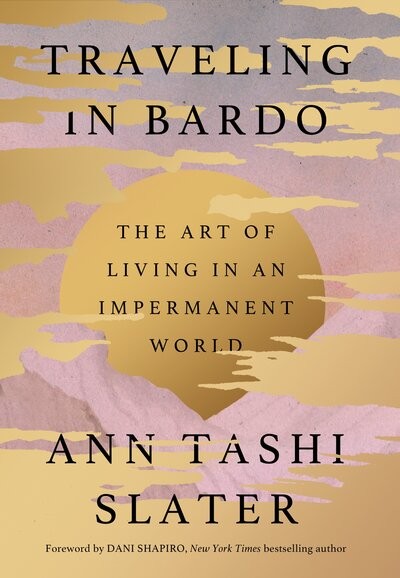
Ann Tashi Slater’s Traveling in Bardo: The Art of Living in an Impermanent World isn’t a self-help guide – it’s a stark, honest exploration of how to navigate life’s inevitable transitions. Slater, raised across Tibetan, Indian, Japanese, and American cultures, doesn’t offer easy answers; instead, she presents a radical acceptance of uncertainty as the fundamental condition of existence.
The Bardo Beyond Death
The book’s title references the Tibetan Buddhist concept of bardo – the liminal space between death and rebirth. However, Slater expands this idea to encompass all life transitions: career shifts, fractured relationships, relocation, loss, even the subtle daily changes that reshape who we are. This reframing isn’t merely philosophical; it’s a deeply practical lens for understanding the constant flux of experience. Impermanence isn’t an abstract concept; it’s the bedrock of reality.
Weaving Personal and Universal Truths
Slater masterfully blends her personal narrative – family migrations, her mother’s death, journeys across continents – with broader historical and existential themes. She pays meticulous attention to detail, grounding abstract meditations in the tangible: the scent of a childhood home revisited, the gradual drift of a fading friendship. This grounded approach is crucial because impermanence manifests not only in grand upheavals but also in the quiet erosion of time.
The author doesn’t shy away from grief or ambiguity, resisting the temptation to distill Buddhism into feel-good mantras. Instead, she invites readers into the challenging work of sitting with unfixable realities. Her descriptions of Tibetan death rituals, for example, aren’t romanticized; they reveal the pragmatic wisdom embedded in ceremonies designed to help the living and the dead navigate transition. This isn’t about spiritual escapism; it’s about facing life’s complexities head-on.
A Timely Guide for Turbulent Times
Traveling in Bardo feels particularly relevant in an age of climate anxiety, political instability, and rapid technological change. Slater doesn’t promise that embracing impermanence will make life easier, but she powerfully suggests that it might make us more human – more tender in loss, more alive to beauty precisely because it’s fleeting.
The book’s structure mirrors its theme: it doesn’t move in straight lines. Chapters circle back to core ideas while opening new perspectives, creating a reading experience akin to a deepening meditation. It’s not a book you finish and forget; it’s one you carry with you, lighter on your feet, more awake to the world’s beauty and its inevitable losses.
Slater has given us a guide for uncertain times, not a map with clear directions, but something better: the companionship of someone who knows the territory and isn’t afraid to walk beside us through it.
This book offers no easy solutions, only the courage to sit with what is, a rare and beautiful companion in the mess of being human.