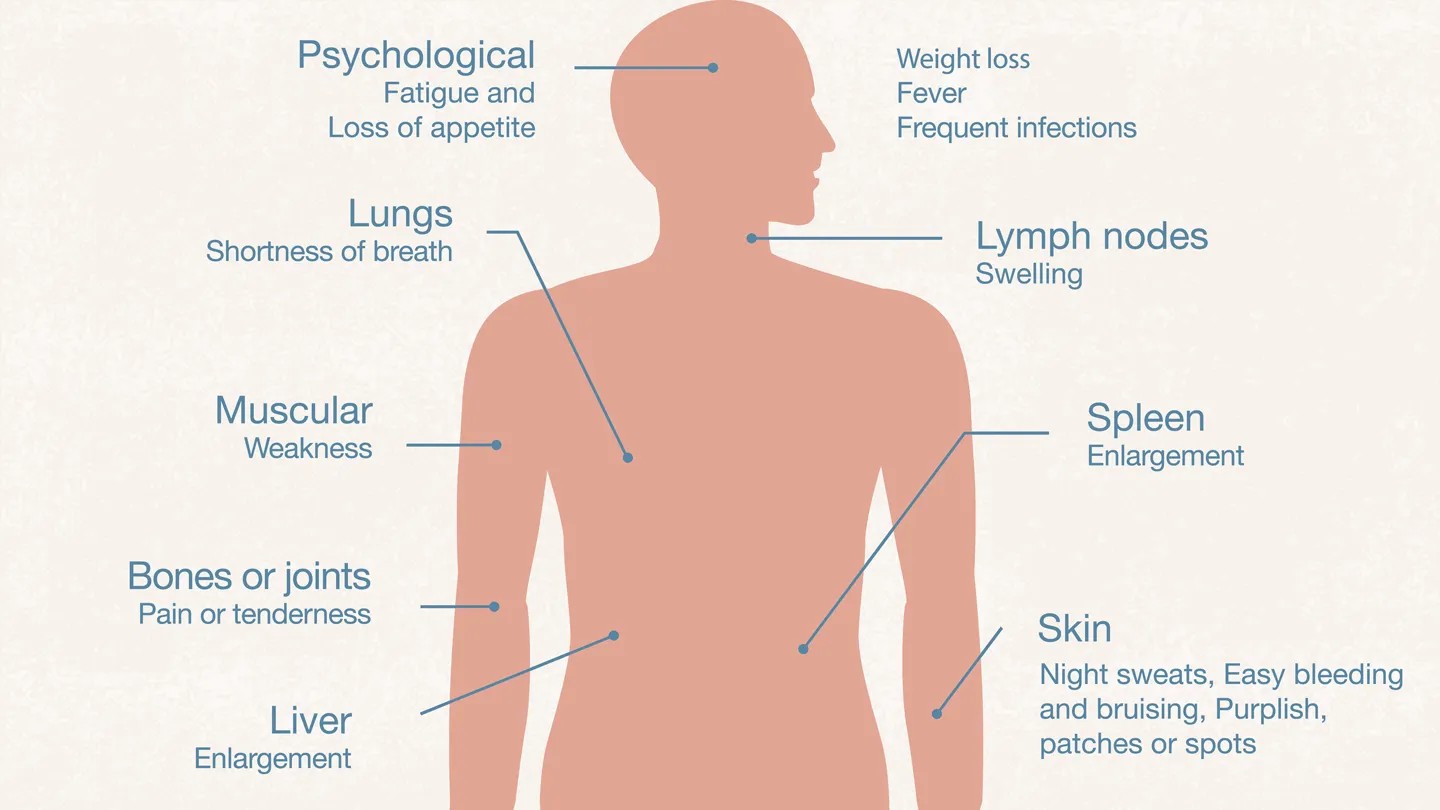
Leukemia is a broad term for cancers affecting blood-forming tissues – primarily bone marrow and the lymphatic system. The disease disrupts the body’s normal blood cell production, leading to a range of symptoms that vary depending on the type and stage of cancer. Early detection is crucial, but symptoms are often vague or mimic other illnesses, making diagnosis challenging.
What Causes Leukemia Symptoms?
The core issue in leukemia is the overproduction of abnormal blood cells. These cells don’t function properly and crowd out healthy cells, leading to deficiencies that cause many of the observed symptoms. This can result in anemia (low red blood cells), increased susceptibility to infections (low white blood cells), and excessive bleeding (low platelets).
Common Leukemia Symptoms: What to Watch For
While specific symptoms differ, some are common across most leukemia types:
- Persistent Fatigue: A deeper tiredness than normal, often linked to anemia.
- Unexplained Weight Loss: Significant weight drop without intentional dieting.
- Frequent Infections: Infections that don’t heal or keep returning.
- Easy Bruising or Bleeding: Unusual bruising, nosebleeds, or bleeding gums.
- Night Sweats and Fever: Drenching sweats during sleep, often accompanied by low-grade fever.
- Swollen Lymph Nodes: Enlarged nodes in the neck, armpits, or groin.
These symptoms are not exclusive to leukemia; however, persistent or worsening conditions should prompt medical evaluation.
Leukemia Types and Their Specific Symptoms
Leukemia is categorized into acute and chronic forms, further divided by the type of blood cells affected.
Acute Lymphocytic Leukemia (ALL)
Most common in children, ALL progresses rapidly. Key symptoms include:
- Severe fatigue and weakness
- Frequent infections
- Pale skin (harder to spot in darker skin tones)
- Bone or joint pain
- Swelling of the face, neck, or chest (due to enlarged lymph nodes or thymus gland)
Acute Myeloid Leukemia (AML)
More common in adults, AML also advances quickly. Unique signs may include:
- Headaches, speech problems, or weakness on one side of the body (due to leukostasis – slowed blood flow)
- Skin rashes or spots
- Bleeding and clotting issues (especially in acute promyelocytic leukemia, or APL)
Chronic Lymphocytic Leukemia (CLL)
CLL often develops slowly, with many patients showing no symptoms initially. Later signs include:
- Gradual fatigue and weakness
- Recurrent infections
- Swollen lymph nodes
- Abdominal discomfort or fullness due to enlarged spleen or liver.
Chronic Myeloid Leukemia (CML)
Similar to CLL, CML may go unnoticed until blood tests reveal abnormal white blood cell counts. Some patients report:
- Bone or joint pain
- Frequent infections
Why Early Diagnosis Matters
Leukemia progresses differently in each case. Acute forms demand immediate treatment, while chronic types may be managed for years. The speed of the disease and the type of blood cells affected determine symptom severity.
The key takeaway: leukemia symptoms are varied and can be subtle. If you experience unexplained fatigue, frequent infections, or easy bruising, consult a healthcare professional for proper diagnosis and treatment. Ignoring these signs can delay life-saving intervention.