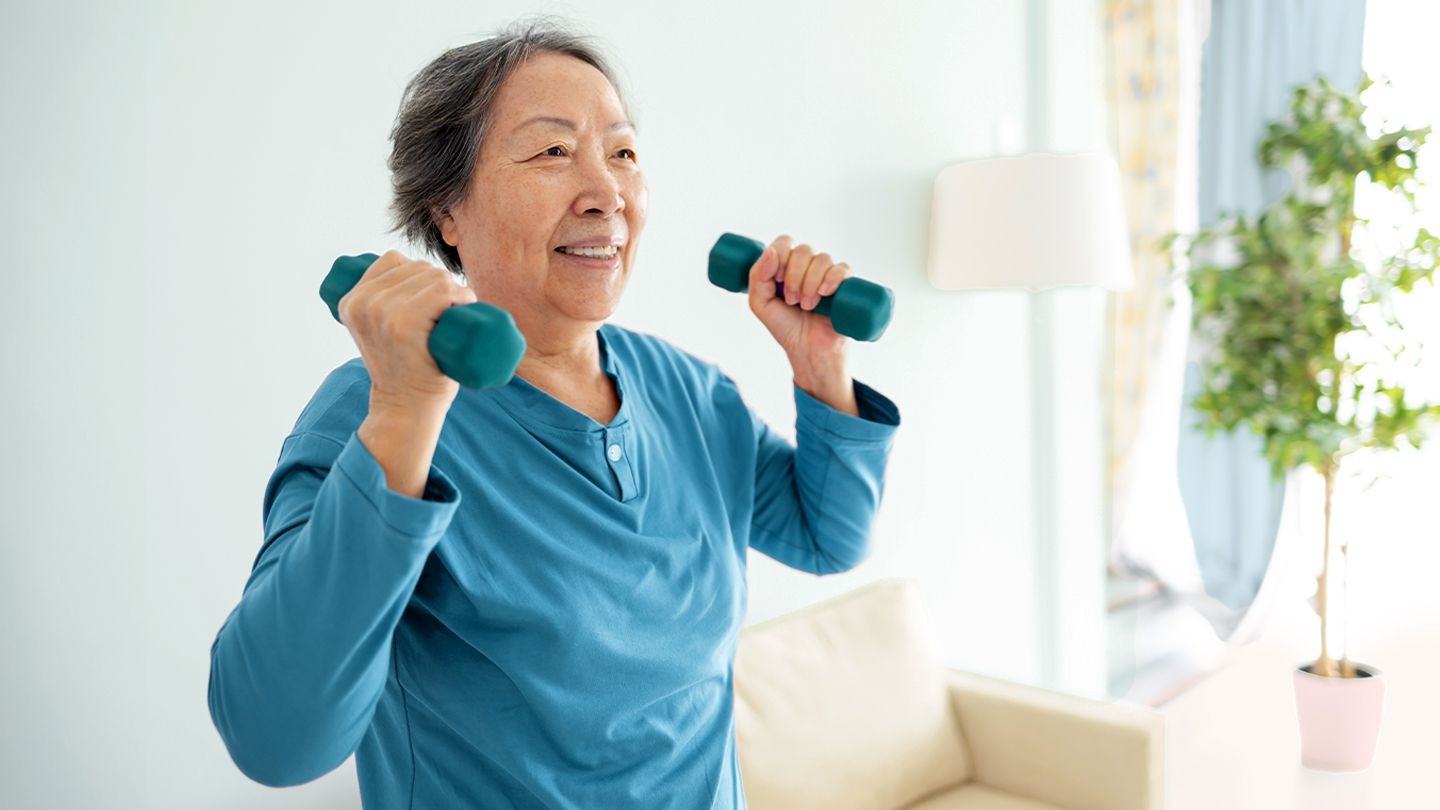
As we age, maintaining strength and mobility becomes increasingly important for overall health and well-being. Resistance training, particularly using dumbbells, offers a powerful way to combat age-related muscle loss (sarcopenia), improve balance, boost bone density, and reduce the risk of chronic diseases.
However, finding the right exercises and knowing how to perform them correctly can be confusing. This guide outlines five key dumbbell exercises that target major muscle groups, helping older adults build a strong foundation for active living.
Why These Exercises Matter: Dumbbells provide a versatile way to work different parts of your body simultaneously (compound movements). Unlike weight machines, they engage more stabilizing muscles, enhancing overall balance and coordination — crucial as we get older.
1. Goblet Squat: Your Foundation
The squat mimics the natural movement of sitting down and standing up. It strengthens the quads, glutes, hamstrings, and core, all vital for everyday activities. Holding a dumbbell vertically close to your chest during the squat increases engagement in your core muscles, further improving stability.
- How to: Stand with feet slightly wider than hip-width apart, toes pointing slightly outward. Hold a dumbbell by one end at chest height, elbows tucked. Keep your back straight, chest lifted, and core engaged as you lower down until your thighs are parallel to the floor (or as low as comfortable). Drive through your heels to return to standing.
Modification: If full squats are challenging, lower into a chair with each rep.
2. Dumbbell Bench Press: Chest, Shoulders, and Triceps Power
This classic exercise targets your chest, shoulders, and triceps. A strong chest is essential for posture and upper body strength; shoulder health can be compromised by age-related changes, while triceps support everyday tasks like pushing open doors or carrying groceries.
- How to: Lie on a bench with feet flat on the floor. Hold dumbbells above your chest with elbows slightly bent, palms facing forward. Lower the weights towards your chest, keeping elbows tucked in at about a 45-degree angle. Press back up to the starting position.
Modification: Perform this exercise on the floor or a stable surface if you don’t have a bench.
3. Dumbbell Deadlift: Functional Strength for Daily Life
The deadlift is often overlooked, but it’s incredibly functional. It strengthens your glutes, hamstrings, back muscles, and core – all crucial for picking up objects from the floor, standing from a seated position, and maintaining good posture.
- How to: Stand with feet hip-width apart, dumbbells in front of your thighs, palms facing your body. Hinge at the hips, keeping your back straight and lowering the weights toward your shins. Engage your core and glutes as you stand up, pushing through your heels.
Key Point: Maintain a flat back throughout the movement to avoid strain.
4. Dumbbell Scaption Raise: Shoulders You Can Rely On
Shoulder strength often diminishes with age. This exercise specifically targets the front and lateral deltoids (shoulder muscles), improving overall shoulder stability and mobility, essential for carrying bags, reaching overhead, or simply maintaining good posture.
- How to: Stand tall with dumbbells at your sides, palms facing each other. Raise the weights out in front of you about 45 degrees until they’re slightly above shoulder height, forming a “Y” shape. Lower back down slowly, keeping your core engaged.
5. Dumbbell Row: Support Your Back
Prolonged sitting can lead to weak back muscles and poor posture. This exercise strengthens the muscles responsible for pulling your shoulder blades together and supporting your spine, helping counteract hunching over keyboards or steering wheels.
- How to: Stand with feet hip-width apart, knees slightly bent, torso leaning forward at about 45 degrees (or as far as comfortable while maintaining flat back). Hold a dumbbell in each hand with palms facing each other. Keeping elbows close to your body, pull the weights up towards your lower abdomen, squeezing shoulder blades together. Slowly lower the dumbbells back down.
Important Considerations for Older Adults:
- Start Gradually: Begin with lighter weights (5-15 lbs) and fewer repetitions (8-12).
- Form First: Perfecting technique is more important than lifting heavy. Focus on controlled movements and keeping your back straight during each exercise. Stop if you feel any pain.
- Warm Up and Cool Down: Dynamic stretches like arm circles, leg swings, and torso twists before lifting prepare your muscles for work. Gentle static stretches (holding a stretch) after your workout aid in recovery.
- Listen to Your Body: Rest as needed between sets and exercises. It’s okay to modify or skip an exercise if it causes discomfort.
By incorporating these five dumbbell exercises into a well-rounded fitness routine, older adults can build strength, improve balance, increase bone density, and enjoy greater independence and vitality in their daily lives.