
For decades, being gay was classified as a disease. The American Psychiatric Association put it there. Their first Diagnostic and Statistical Manual of Mental Disorders, or DSM, listed homosexuality as a mental illness when it launched in 1952.
It wasn’t controversial then. It matched what society believed.
Then the protests started. Activists showed up at APA meetings. They brought data. They argued the classification was wrong.
The vote changed everything.
In 1973, the majority of APA members agreed. Homosexuality was removed. It wasn’t a disorder anymore.
This shift mattered. It helped change how America viewed LGBTQ+ people. It also showed something else. The DSM holds power. It shapes public opinion.
Today, we use the DSM-5. It is the fifth edition. It drops the Roman numerals. It lists 157 disorders. But it does not tell you how to treat them. No medication advice. No treatment plans.
Its job is simpler.
It helps doctors identify conditions. It standardizes diagnosis. It covers mood issues. Personality disorders. Cognitive problems. Identity concerns.
Why does this matter to you?
Insurance companies care. The manual provides uniform diagnostic codes. These codes are required for billing. If a condition isn’t in the DSM-5, U.S. insurers often won’t pay.
The manual is mostly used in the United States. Most of the world uses the WHO’s International Classification of Diseases (ICD). The ICD covers all diseases. Not just mental health. The APA says these two systems should work together. They are compatible.
So where did this start?
The need for classification is old. The U.S. Census began tracking mental illness in 1840. They counted “idiocy/insanity.” It was a small step. But it was the first statistical attempt to gather data on mental health.
By 1880, the Census got more specific. They tracked dementia. Melancholia. Epilepsy. Mania.
Hospitals were terrifying places. A century ago, people were locked up for things we now treat easily. Bipolar disorder was one of them. Institutionalization was often worse than the illness itself.
Progress came slowly. The DSM helped improve care quality.
In 1917, the American Medico-Psychological Association (later the APA) worked with the National Commission on Mental Hygiene. They created a plan for uniform health stats in mental hospitals. The Census Bureau adopted it.
The APA began developing psychiatric classifications in 1921. They focused on severe disorders.
After World War II, the APA used a U.S. Army classification system. They adapted it for veterans. That system became the first DSM.
The process has evolved. The stakes have risen. But the goal remains. Better diagnosis. Better data. And for millions of people, better access to care.
The manual is not a bible. It is a tool. A changing one. One that reflects what we know today. Not what we knew yesterday.
Who decides what is normal? The doctors who write it. Or the patients who live with it?
The answer is still being written.
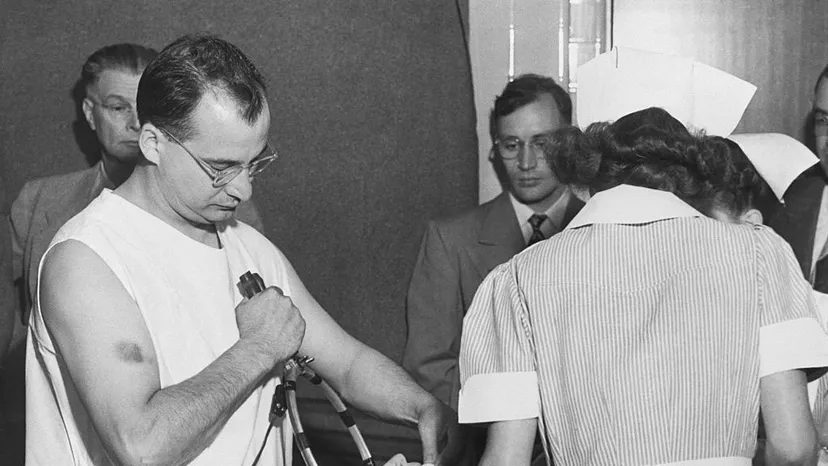

The first official version of the Diagnostic and Statistical Manual of Mental Disorders (DSM) dropped in 1952. The latest main edition, DSM-5, arrived in 2013. Between those dates, the manual didn’t just sit there. It evolved. Each update required years of meetings. Work groups debated endlessly. Psychiatric experts from across the globe weighed in.
Today, the manual is built on three specific components for every disorder listed.
Diagnostic classification
This is the official list. It holds the mental disorders recognized by the field. Every diagnosis gets a code. These come from the World Health Organization’s ICD (International Classification of Diseases). The codes help with data collection. They also streamline billing. Providers and hospitals use them to get paid correctly.
Diagnostic criteria
These are the rules. They list the symptoms you must have. They specify how long those symptoms must last. You also have to rule out other disorders. The criteria are strict. If you don’t meet them, you don’t get the diagnosis.
Descriptive text
This section provides context. It covers prevalence. It looks at development and course. It lists risk factors. It also mentions prognosis. It tells you what to expect.
Adding a new mental illness to the DSM-5 is not easy. It’s a massive feat. DSM-IV came out in 1994. DSM-5 followed nearly two decades later. The changes were small in number but huge in impact. The DSM-5 Task Force reviewed every scientific study published on psychiatric disorders between 1994 and 2013. That’s almost 20 years of research.
After reviewing everything, they made proposals. The committee debated them. Outside experts gave input. Two new committees added independent oversight. The Scientific Review Committee checked the science. The Clinical and Public Health Committee looked at real-world impact.
“Let’s say there is enough scientific evidence and let’s say there is a valid change, to have to wait 15 or 20 years for clinicians and patients to benefit from that change is unconscionable.”
Editing has changed. Experts no longer wait decades. They can submit changes online now. The APA board of trustees approves these edits. Clinicians get notified. They can update diagnoses in real time.
Dr. Philip Wang runs the APA’s research division. He calls this a major advance. The manual is now a “living document.” Waiting fifteen or twenty years for patients to benefit from new science is unacceptable. Once an edit is live, users can hover over it in the online version. They see the details. They see what the text used to be. They see the supporting evidence.
“It’s completely transparent, continuous, and at the end of the day, it hopefully is good for clinicians and benefits patients.”
Changes from DSM-IV to DSM-5
The transition from DSM-IV to DSM-5 wasn’t just about adding new disorders. It was about restructuring how we see mental health. The old manual relied heavily on a multi-axial system. That system had five axes. Axis I covered clinical disorders. Axis II covered personality disorders and intellectual disabilities. Axis III covered general medical conditions. Axis IV covered psychosocial problems. Axis V was for global assessment.
DSM-5 threw that out. It removed the multi-axial framework. Why? It complicated things. Clinicians found it cumbersome. The new system integrates medical and psychiatric conditions. It simplifies the diagnostic process.
One of the biggest shifts involved autism. Autism Spectrum Disorder replaced three separate conditions. Previously, you had Autistic Disorder. You had Asperger’s Disorder. You had Childhood Disintegrative Disorder. DSM-5 merged them into one spectrum. The change reflected growing evidence that these were variations of the same condition, not distinct entities. Severity is now rated on a scale. This helps clinicians tailor treatment.
Anxiety disorders got a makeover too. Obsessive-Compulsive Disorder (OCD) moved out of anxiety. It now has its own chapter. Trauma- and stressor-related disorders were grouped together. Post-Traumatic Stress Disorder (PTSD) and Acute Stress Disorder sit side by side. This makes sense. They share triggers. They share treatment pathways.
Substance use disorders also changed. The old manual distinguished between “abuse” and “dependence.” DSM-5 combined them. It created a single category: Substance Use Disorder. The severity is mild, moderate, or severe. This removed ambiguity. Dependence wasn’t always addiction. It could be physical tolerance. The new system focuses on harmful use and impairment.
Bipolar disorder saw subtle but important tweaks. The category of “Bipolar and Related Disorders” was expanded. It included conditions previously buried in other sections. This ensures clinicians don’t miss diagnoses. It highlights the link between mania and substance use.
The manual also addressed the overlap between disorders. Hoarding Disorder got its own entry. Previously, it was often grouped with Obsess
The leap from DSM-IV to DSM-5 wasn’t just a cosmetic update. It was a structural overhaul designed to fix a glaring flaw in mental health diagnostics: excessive comorbidity. In plain terms, patients were getting diagnosed with too many conditions at once.
“If someone was diagnosed with one condition they were likely to also be [incorrectly] diagnosed with having a second condition,” says Wang.
Patients often fell into the cracks between categories. Clinicians relied heavily on the “not otherwise specified” (NOS) category to patch the gaps. If you have high comorbidity and heavy NOS usage, it simply means the categories are broken for both patients and doctors.
Combining Disorders to Reduce Confusion
To solve this, DSM-5 combined nearly 30 disorders. The goal was to reduce diagnoses, cut down on unnecessary comorbidity, and eliminate the frustrating NOS label.
The result? Two diagnoses were eliminated entirely. Fifteen new ones were added.
The most famous change involved Asperger’s syndrome. It’s gone. The condition is now classified under the broader umbrella of autism spectrum disorder (ASD).
This shift didn’t happen overnight. It was the result of decades of clinical findings and research. ASD was revised to encompass four previously distinct disorders:
* Autistic disorder
* Asperger’s disorder
* Childhood disintegrative disorder
* Pervasive developmental disorder not otherwise specified (PDD-NOS)
Why It Matters for Diagnosis Validity
The hope is that refining criteria and adding a severity scale makes diagnosis more valid and reliable. It forces clinicians to look at the whole picture rather than slotting patients into rigid boxes.
But it wasn’t without backlash. Critics worried that removing a long-held label like Asperger’s would cause confusion. Would insurance companies still pay? Would families feel like their identity was erased?
“I know that there was a lot of deliberation about it and then a lot of questioning,” Wang says. “It’s something that people are still wrestling with.”
Advocacy groups like Autism Speaks have stepped in to clarify the practical side. They note that changing the name shouldn’t affect access to services or insurance coverage. If you had a diagnosis of Asperger’s, you should still be covered under the new ASD framework.
A Lifespan Approach
DSM-5 also moved away from labeling problems as strictly “childhood disorders.” The new manual recognizes that issues change and manifest differently at all life stages. It places a heavier emphasis on the role parents play in diagnosis and treatment.
Despite the general streamlining, two childhood-specific issues were added to address gaps in prior editions.
Disruptive mood dysregulation disorder (DMDD) describes severe, recurrent temper outbursts that are wildly inappropriate for the situation or intense in level.
Social communication disorder (SCD) involves persistent difficulties with verbal and nonverbal communication. This can’t be explained by low cognitive ability.
Previous editions didn’t include appropriate treatments for these problems because they hadn’t been fully defined or studied. Treatment varied wildly and often suffered as a result.
Section III: The Laboratory
DSM-5 introduced Section III for conditions where scientific data is still too thin to confirm they are psychiatric disorders. This includes:
* Internet Gaming Disorder
* Persistent Complex Bereavement Disorder
* Caffeine Use Disorder
Section III also holds measures and models that help clinicians evaluate patients better.
“There’s been a push that there are dimensions that run across disorders,” Wang says. “Some patients have symptoms or signs that appear across many diagnostic categories. That’s why they’re ending up with lot of comorbid diagnoses.”
Cross-Cutting Measures
To combat the comorbidity issue, DSM-5 introduced a cross-cutting dimensional measure. This helps clinicians identify underlying dimensions present in multiple disorders.
It’s still in need of validation before permanent inclusion in the main text. But many physicians already think this way.
“It’s like when primary care doctors do a review of systems,” Wang explains. “They probe further if there’s a positive. In mental health we need a mental health review of systems. That’s what the DSM cross-cutting measure is.”
Cultural Context in Diagnosis
Section III also includes a cultural formulation interview guide. Its purpose is to help clinicians identify how a patient’s cultural background affects their perception and presentation of symptoms.
“The interview provides an opportunity for individuals to define their distress in their own words and then relate this to how others, who may not share their culture, see their problems,” the APA explains. “This gives the clinician a more complete foundation on which to base both diagnosis and care.”
Caffeine Use Disorder: A Deep Dive
One or two cups of coffee is fine. Too much caffeine can lead to “caffeine intoxication,” which can send people to the hospital.
DSM-5 added Caffeine Use Disorder (CUD) to Section III for further study. Before it becomes a confirmed diagnosis, ask yourself these questions:
- Do you want to quit or control caffeine use but are unsuccessful?
- Do you continue using caffeine even if you know it causes physical or psychological issues?
- Do you experience excessive withdrawal when you try to cut back?
If you answer yes to all three, you could be a candidate for CUD.
Controversies and Reversals With the DSM

The DSM has never been static. It bends. It shifts. It occasionally makes a complete 180-degree turn when the evidence—or the culture—demands it.
These aren’t just minor edits. They are profound acknowledgments of error, progress, or changing social norms. Looking at the history of the manual reveals a system that is capable of self-correction, even if it’s slow.
Decriminalizing Kink and Gender Variance
One of the most visible shifts occurred with the release of DSM-5. It explicitly depathologized kinky sex.
If you are a consenting adult who enjoys BDSM, fetishes, or cross-dressing, you are no longer diagnosed with a mental illness. The manual now categorizes these as “unusual sexual interests.” The distinction? They only become a disorder if they cause significant distress or impairment to the individual. Otherwise, they are just… preferences.
Gender identity saw a similar, though more complex, overhaul. “Gender identity disorder” was retired. In its place came “gender dysphoria.”
This wasn’t just semantic. The old term implied that being transgender was inherently disordered. The new term focuses on the distress caused by the mismatch between one’s assigned sex and gender identity. It validates the struggle without invalidating the identity itself.
“The diagnosis does spell out some of the challenges of living with gender dysphoria, as well as the different paths people choose to take to resolve this.”
But it’s not a perfect fix. Critics point out a practical snag: some insurance companies still require a “mental disorder” diagnosis to cover hormonal or surgical treatments. If you aren’t “sick,” they argue, you aren’t entitled to care. So the shift, while morally significant, has bureaucratic friction.
The Long Road for Homosexuality
The removal of homosexuality from the diagnostic manual is the oldest and perhaps most famous turnaround.
DSM-II listed homosexuality as a mental disorder. The APA finally corrected this in 1973 with DSM-III. Jack Drescher, writing in Behavioral Sciences, noted this as “the beginning of the end of organized medicine’s official participation in the social stigmatization of homosexuality.”
It didn’t happen overnight.
DSM-III initially kept a loophole. It distinguished between people comfortable with their sexuality and those who weren’t. The latter could still be diagnosed with “Sexual Orientation Disturbance.” It was a half-measure. A compromise.
Eventually, the pressure mounted. The international community followed suit. In 1990, the World Health Organization removed homosexuality from the International Classification of Diseases (ICD-10). By the 1980s, the residual labels were gone. The path was cleared.
The Normalization Trap
Here is the counter-argument.
Just as we remove labels, there is a risk of adding them where none belonged. The complaint is persistent: once a condition enters the DSM, “normal” behavior can be redefined as pathological.
Allen J. Frances, a key figure in the development of DSM-IV, warned about this during the DSM-5 press. He argued that the manual was turning “normal grief, gluttony, distractibility, worries, reactions to stress, the temper tantrums of childhood, the forgetting of old age” into medical problems.
The result? Millions of people labeled “psychiatrically sick” and prescribed medication they don’t need.
It’s a valid fear. Where do we draw the line between a personality quirk and a clinical disorder?
Severity Matters
The DSM-5 attempted to address this normalization trap with a new tool: an acuity measure.
Disorders exist on a spectrum. Not every instance of depression is clinical depression. Not every episode of grief is Major Depressive Disorder. The new scales help clinicians evaluate symptoms and levels of impairment more accurately.
Consider grief. You lose your father. You are devastated.
Are you able to get out of bed? Can you function? Or are you barely managing to survive day-to-day?
The assessment determines the treatment. If you can function, “watchful waiting” might be the best path. If you cannot, talk therapy, medication, or a combination might be necessary.
This doesn’t solve the problem entirely. Definitions are still fuzzy. The line between “normal” and “disordered” remains slippery. But it moves the conversation from “yes/no” to “how much?” and “how long?”
The system is imperfect. It is constantly trying to catch up with human complexity. It will get it wrong sometimes. It has. It will likely continue to do so. But the capacity to change remains.