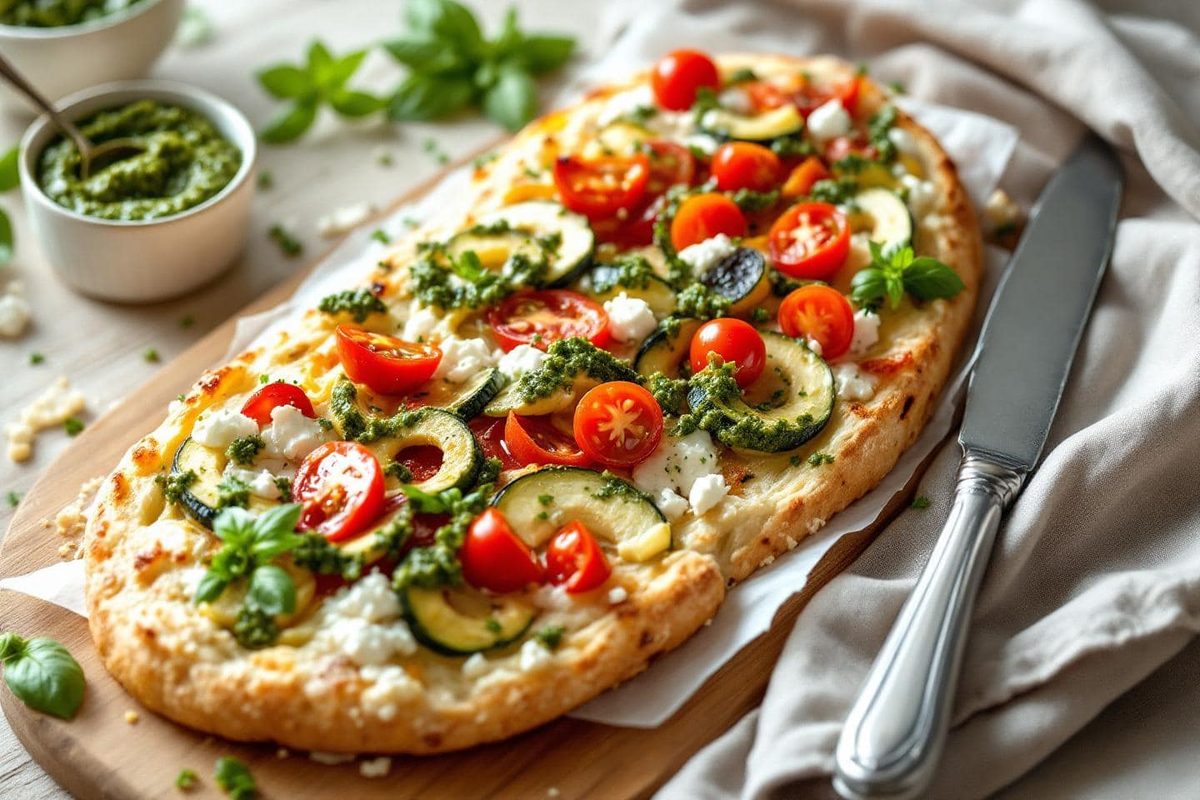
There is a specific kind of magic that happens when warm bread smells drift out of the oven. It smells like summer evenings. It smells like comfort. Now imagine that bread is a golden, fluffy focaccia topped with roasted vegetables. Imagine digging into it to find crisp fava beans, satin-skinned zucchini, or yesterday’s leftover ratatouille hiding inside. This isn’t just dinner. It’s a way to turn fridge scraps into a feast.
The secret weapon here is an express pesto made from herb trimmings or vegetable tops you would normally throw away. These forgotten greens add a vibrant punch of flavor. They transform simple leftovers into something that looks and tastes like it came from a high-end market. Let’s look at how to build this dish from scratch, focusing on texture, waste reduction, and bold flavor.
The Foundation: A Soft, Olive Oil-Rich Dough
Every great focaccia starts with the dough. You want something airy. Something that feels almost like a brioche but holds up to heavy toppings. The key is hydration and fat.
For a standard batch, you will need:
– 350g wheat flour (T45 or T55 works fine)
– 20g fresh baker’s yeast (or 8g dry)
– 200ml lukewarm water
– 50ml olive oil (plus more for the top)
– 8g fine salt
– 1 teaspoon sugar
The sugar isn’t just for taste. It helps wake up the yeast. The olive oil is non-negotiable. It provides that distinct Mediterranean aroma and keeps the crumb tender for days.
The Pantry Challenge: Using What You Have
This recipe is designed to be anti-waste. Do not go to the store for this. Look in your crisper drawer. Do you have wilting spinach? Half a zucchini? A bunch of carrots with their leafy green tops still attached? That is your inventory.
You need about 300g of mixed vegetables. Options include:
– Zucchini
– Bell peppers
– Spring onions
– Aubergine
– Carrots
– Faded cherry tomatoes
Don’t ignore the tops. Radish greens, carrot tops, and beet leaves are edible and delicious. They are often discarded, but they are packed with flavor. If you have a handful of nuts—walnuts, almonds, or hazelnuts—they will add crunch to the pesto.
The Express Pesto: Saving the Greens
Here is where most recipes fail. They ask for fresh basil. You might not have that. Instead, use what you have. This is an express pesto made from vegetable trimmings.
Take a handful of the greens mentioned above. Add:
– 40g nuts (toasted if you have time)
– 2-4 tablespoons olive oil
– Grated hard cheese (Parmesan, Pecorino, or Mimolette)
– One clove of garlic
– Lemon zest or a splash of juice
Blend these ingredients until you have a thick, aromatic paste. The acid from the lemon brightens up the earthy flavors of the greens. The nuts add body. The cheese adds saltiness. This paste is your flavor booster. It cuts through the richness of the bread.
Step-by-Step Assembly
1. Make the Dough
In a large bowl, dissolve the yeast and sugar in the lukewarm water. Let it sit for a few minutes until it gets foamy. This means the yeast is alive and active. Add the flour, salt, and olive oil. Mix until combined.
Knead the dough for ten minutes. You want it to be smooth and elastic. It should spring back when you poke it. Cover the bowl and let it rise for at least one hour. You are waiting for it to double in size. When it’s ready, your kitchen will smell like warm, toasted grains.
2. Cook the Vegetables
While the dough rests, prep your veggies. Slice them into uniform pieces so they cook evenly. Toss them in olive oil. Heat a pan over high heat. Sauté the vegetables until they are tender and have some color on the edges. You want caramelization. That browning brings out the natural sugars in carrots and peppers.
Season with salt and herbs like oregano or thyme. Set them aside. Do not overload the focaccia with raw veggies; they will release water and make the bread soggy. Roasted or sautéed is better.
3. Blend the Pesto
Pop your greens, nuts, garlic, cheese, and oil into a food processor or blender. Pulse until smooth. Taste it. Adjust the salt or lemon if needed. This pesto should be vivid and potent.
4. Assemble and Bake
Preheat your oven to 210°C (410°F). Oil a baking tray generously. Stretch or press your dough onto the tray. It should be thin but not paper-thin.
Here is the fun part. Press the roasted vegetables into the dough. Push them halfway in so they nestle into the surface. Dollop the express pesto over the top. Scatter any remaining nuts or herbs over it. Add a drizzle of olive oil and a pinch of flaky sea salt. If you have black olives or lemon zest, add them now for a pop of color.
Bake for 25 to 30 minutes. Watch closely. You want the edges to be crisp and golden brown. The center should be cooked through but still soft.
Why This Works
This method works because it balances textures. You have the chew of the bread. The crunch of the nuts and roasted veggies. The creaminess of the cheese and oil. It is a complete meal structure. It also solves the problem of food waste. Those wilted greens that were heading for the compost bin are now the star of the show.
The result is a dish that feels generous. It is comforting. It is perfect for sharing. Serve it with a glass of wine. Let it cool slightly so you can handle it without burning your fingers. Take a bite. Notice the contrast between the soft interior and the crispy crust. Notice how the pesto ties everything together.
It is simple. It is efficient. And it tastes like you spent hours in the kitchen, even though you didn’t.
Next time you open your fridge and see things looking a bit tired, don’t toss them. Look for the potential. A little olive oil, some heat, and a bit of creativity can change everything. The bread is waiting. The veggies are ready. All that’s missing is your decision to start.
Pairing Crunchy Salads with Herb-Loaded Focaccia
This isn’t just about eating bread. It’s about texture. A vegetable focaccia with pesto needs something that bites back. Skip the wilted greens. Go for crispness. Thinly sliced radishes. Cucumber ribbons. A ripe heirloom tomato is non-negotiable if you want juice that runs down your chin. A splash of balsamic vinegar adds acidity. Fresh herbs cut through the richness of the pesto. Want more substance? Grilled peppers bring smoke and sweetness. Shaved fennel adds an anise kick. These sides aren’t garnishes. They are counterpoints to the soft, oily crumb of the bread.
How to Keep Focaccia Soft: Storage Secrets for Leftovers
Let’s be real. Bread goes stale. Fast. But storing leftover focaccia doesn’t have to mean accepting dry crumbs. The trick is simple: wrap it in a clean kitchen towel. Not plastic. Plastic traps steam and makes the crust soggy. A cloth keeps it breathable. The interior stays moist and tender overnight.
When you’re ready to eat it again, don’t microwave it. That makes rubber. Heat it. A brief trip in a hot oven wakes up the crust. A quick sear in a skillet does the same. The golden crust cracks back into existence. The pesto, once muted by the fridge, releases its garlic and basil aroma again. It tastes brand new.
Creative Variations: Using Kitchen Scraps Effectively
This base recipe is a blank canvas. Or rather, a sponge. It absorbs whatever you throw at it. Don’t have fresh veggies? Use leftover roasted chicken. Shred it. Toss it in. Melted cheese cubes work too. They bubble into pockets of saltiness.
Think seasonal. Winter root vegetables? Grate them. Sauté them until caramelized. They pair beautifully with the herbaceous profile of the bread. Add pitted olives for a briny punch. Toasted nuts add crunch. This is improvisational cooking at its finest. You aren’t following a script. You’re reacting to what’s in your fridge.
Hot vs. Cold: When to Eat Focaccia
Temperature changes everything.
Eat it hot. The fats in the pesto melt. The herbs smell brighter. Pair with a dry white wine or a homemade lemonade. The acidity cuts the oil. The airy crumb lifts the flavor.
Eat it cold. The texture firms up. It becomes substantial. Perfect for a picnic. Slice it thick. Share it. The density holds up better without wilting. Each bite balances the tender bread against the intense, garlicky pesto. It’s portable. It’s satisfying. It doesn’t need reheating.
Anti-Waste Ideas: How to Recycle the Last Pieces
Running low on focaccia? Don’t throw it out. Recycling stale focaccia is an art form.
Toast the slices. Add cheese. Melt it. You have a focaccia croque-monsieur. It’s richer than the original. Use it as a base for bruschetta. Spread pesto made from herb scraps (like carrot tops or radish greens) on top. Add chopped tomatoes. Even soggy bread has a purpose. Crumble it over gazpacho or chilled soup. It adds texture where bread would otherwise disappear.
This approach celebrates authentic Mediterranean flavors while reducing waste. It turns scraps into a feast. It proves that intuitive cooking is sustainable. And delicious.
The kitchen is messy. The ingredients are imperfect. That’s the point.