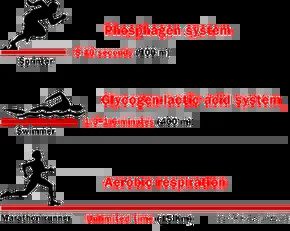
Your muscles store glycogen. It is a complex carbohydrate, essentially a long chain of glucose molecules waiting to be used. When you need energy fast, your cells split that chain apart. The process that follows is anaerobic metabolism. Anaerobic simply means without oxygen.
This system converts glucose into ATP, which powers your movement. It also creates a byproduct called lactic acid.
About 12 chemical reactions are required to produce ATP through this pathway. Because of that complexity, it supplies energy at a slower rate than the phosphagen system. Still, it works rapidly enough to sustain high-intensity effort for roughly 90 seconds.
Why You Don’t Need Oxygen Right Away
This system does not require oxygen. That is a significant advantage when you first start moving. Your heart and lungs need time to ramp up and deliver oxygen-rich blood to your tissues.
Meanwhile, your muscles are already contracting. Rapid contractions physically squeeze off local blood vessels. This deprives the working muscle of oxygen anyway. The glycogen-lactic acid system steps in precisely because oxygen delivery is delayed or blocked by mechanical pressure.
The Cost of Anaerobic Effort
There is a hard limit to this process. Lactic acid accumulates in the muscle tissue.
This buildup is what causes the burning sensation and fatigue you feel during intense exercise. The acid interferes with muscle function. It leads to the soreness and tiredness that signal your body to slow down or stop.
It is not a failure. It is a limit. Once the lactic acid reaches a certain concentration, you cannot sustain that intensity. You have to rest, or switch to a lower intensity that allows oxygen to catch up. The system works until it cannot work anymore.