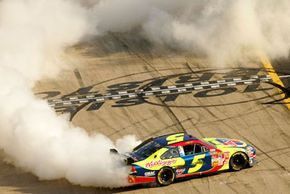
Winning a NASCAR race isn’t just about crossing the finish line first. It’s about surviving the chaos, pleasing the sponsors, and securing the paycheck. After the checkered flag waves, the driver navigates a media gauntlet. This usually involves the infamous “hat dance,” where champions pose with team members and family while sporting various sponsored caps. Champagne sprays over the crew. It’s a ritual. But the celebration is just the surface level.
The real stakes are financial and structural. Drivers don’t just get a trophy; they accumulate points that determine their standing in the Chase for the NASCAR Nextel Cup. More importantly, their salaries depend on performance. The prize structure is complex, pulling money from multiple sources.
- The racing purse: Tracks pay drivers simply for showing up. This base amount can hit $250,000 or more.
- Television awards: Performance-based bonuses tied to broadcast metrics.
- Car owner specialty awards: Incentives tied to specific vehicle achievements.
- Qualifying and special awards: Bonuses for pole positions or leading laps.
Jeff Gordon exemplifies this financial engine. By 2002, just a decade into his career, he had already eclipsed $50 million in career earnings. By the end of the 2007 season, that number climbed to roughly $65 million. That kind of wealth doesn’t appear without a system designed to reward consistency and speed.
The Evolution of Safety and Competition
NASCAR has transformed significantly since its founding in 1947. The sport has prioritized safety without stripping away the raw excitement that defines stock car racing. Technological innovations have been the primary drivers of this change.
Central to this evolution is the Car of Tomorrow, often abbreviated as the COT. NASCAR designed this universal chassis with three goals in mind: enhanced safety, tighter competition, and reduced costs for teams. The COT represented a massive shift in philosophy. Teams debuted the new design during 16 events in the 2007 NASCAR Nextel Cup Series. By 2008, it became the standard for all races.
Critics argue that the Car of Tomorrow was too radical a departure from tradition. Fans who grew up with the old aesthetics sometimes find the new cars less appealing. However, perspective matters. Red Byron, the winner of the first NASCAR Strictly Stock championship in 1949, drove an Oldsmobile coupe. If Byron saw today’s carbon-fiber components, roll cages, and aerodynamic downforce, he likely wouldn’t recognize the machine. He would, however, understand the core appeal. The adventure, the thrills, and the danger remain unchanged. The equipment has evolved, but the soul of the sport has not.
Navigating the Modern Series
For fans looking to deepen their understanding of these mechanical and structural shifts, several resources provide detailed breakdowns.
How NASCAR Race Cars Work explains the engine configurations and aerodynamics that keep these vehicles glued to the track. How NASCAR Safety Works details the roll bars and fuel cells that protect drivers during high-speed impacts. For historical context, How the Daytona 500 Works offers insight into the sport’s most prestigious event. Those interested in comparative analysis can explore How Formula One Works or How Champ Cars Works to see how American stock car racing differs from open-wheel international series.
The official NASCAR website and NASCAR on Fox Sports provide real-time results, season recaps, and driver profiles. For broader industry context, sources like Greg Fielden’s NASCAR: Races, Tracks & Superstars and the NASCAR for Dummies guide offer foundational knowledge. Media coverage from USA TODAY and the Daytona Beach News-Journal also highlights the sport’s growth and regional roots, particularly in places where beach racing birthed the speed culture.
The COT era marked a definitive break from the past. Whether it was the right move remains a debate among purists and pragmatists alike. What is clear is that the money, the safety standards, and the uniformity of the cars have reshaped how teams compete. Drivers still chase the hat dance. They still spray the champagne. But the path to Victory Lane is now paved with different engineering and different economics. The race continues, but the rules of engagement have fundamentally shifted.