Every boy who ever scraped his knees as a Cub Scout likely remembers the smell of pine sol and the buzz of competition. The Pinewood Derby isn’t just a race. It is a rite of passage that has persisted since the 1950s. You take a block of wood. You carve it into a shape that slices through air. You paint it. You add wheels. Then you drop it on a track and let gravity do the heavy lifting.
There is no engine in those cars. The car moves because gravity pulls it down an inclined track. The goal is simple: make the car as aerodynamic and properly weighted as possible. But let’s be honest. There was always that nagging question.
What if these little wooden blocks had real power?
If you added an engine, how fast would it go? Would the rules even make sense anymore?
Fortunately, that hypothetical has a real-world answer. It is called CO2 dragster racing.
Think of it as the Pinewood Derby on steroids. The cars look similar. They are still small, wooden racecars. But instead of gravity, they use a pressurized carbon dioxide cartridge as the propulsion system. The cartridge is built directly into the chassis. When released, the gas expands and shoots the car down a flat, level track.
The speed difference is staggering.
On a standard 65.5-foot track, which is about 20 meters, a CO2 racer crosses the finish line in just over one second. That is nearly 70 miles per hour. Or 112.7 kilometers per hour. For a car the size of a hand, that is terrifyingly fast.
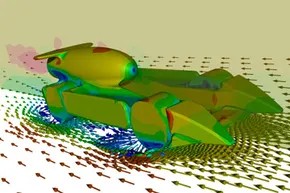
You might think the engine removes the need for engineering. You are wrong. Aerodynamics still matter. Weight distribution still matters. Friction still kills your speed. If your car is not shaped right, it will wobble. If it is not weighted correctly, it will lose traction or drag.
These events are not just for scouts. Schools use them to teach physics. Students learn about inertia. They learn about mass. They learn how friction interacts with design. It is a competitive hobby for adults and kids alike.
We are going to break down the CO2 dragster racing scene. We will look at how the cars work. We will explain why they are so fast. And we will show you how to build the ideal racer.