


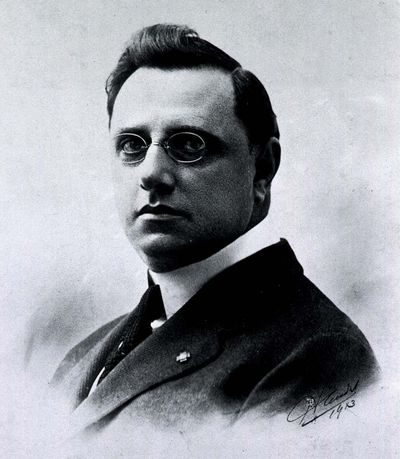
The man who helped prove that mosquitoes spread yellow fever was born in Cuba, grew up in New York and died on his way to Louisiana to find a new job. His name is Aristidess Agramonte y Simoni. He was a physician, pathologist and bacteriologist. Most people don’t know his name. But his research changed the way we understand the spread of disease.
He was a member of the Reed Yellow Fever Board. This group made an important discovery in 1901. confirmed the role of mosquitoes in the spread of disease. This is not just a theory. This has been proven.
Early childhood education and training
Agramonte was born on June 3, 1868 in Camagüey, Cuba. His father is a famous doctor. He died while serving in the Cuban Liberation Army. This loss affected his early life.
The family moved to New York. Aristides continued his studies there. In 1892 he received the degree of Doctor of Medicine from the Columbia University College of Physicians and Surgeons.
After training, he delved into science. He worked in pathology and bacteriology. He works at Bellevue Hospital. He also worked for the New York City Department of Health.
Military service and scientific progress
Agramonte served as assistant surgeon in the US Army from 1898 to 1902. This role put him at the center of a major medical crisis. Yellow fever killed soldiers and civilians.
The Reed Yellow Fever Board was formed to solve this mystery. How is the disease spread? Agramonte was a key member. His discovery in 1901 was important. He helped establish the connection between mosquitoes and the spread of yellow fever.
This discovery is no small feat. It changes the whole approach to managing the disease. Instead of focusing solely on hygiene, authorities are now focusing on vectors. This saved countless lives.
Cuban medical leadership
Agramonte’s influence extended beyond the US military. In 1900, he became a professor of bacteriology and experimental pathology at the University of Havana. He played several roles.
He is a member of the Government’s Infectious Diseases Committee. He served as Cabinet Secretary for Health and Charities. He also practiced medicine. Many Americans living in Havana sought his care.
He was an influential leader in the scientific field of medicine in Cuba. His work bridges the gap between clinical practice and public health policy.
Final meeting and death
Agramonte’s career culminated in an important appointment. In 1931, he was appointed head of the newly established Department of Tropical Medicine at the Louisiana Medical College. This is a prestigious position. His expertise was recognized.
However, he did not make it to this mission alive. He died on August 19, 1931 in New Orleans, Louisiana. He died while preparing for the role.
His legacy lives on. Much of the knowledge gained about mosquito-borne diseases is due to his rigorous approach. He combines fieldwork and experimental science. He challenges conventional wisdom with evidence.
Why do we forget names like Agramonte? History often focuses on generals and politicians. Scientists work behind the scenes. They provide evidence. their contributions


